A stove decision affects more than tonight’s dinner. The electric versus gas stove question can shape how quickly meals cook, how warm the kitchen feels, what cookware you use, and what kind of service your home may need down the road. For Oklahoma homeowners replacing an aging range or dealing with a recurring oven problem, the best choice usually comes down to your home’s setup, your cooking habits, and what you value most.
Electric Versus Gas Stove: The Everyday Difference
The most noticeable difference is how heat reaches the pan. A gas stove uses an open flame. You can see the heat level right away, and the burner responds almost immediately when you turn the knob up or down. Many experienced home cooks prefer that direct control, especially for tasks such as sautéing, simmering, and using a wok.
A traditional electric stove heats a coil or smooth glass surface, which then heats the cookware. It generally takes longer to warm up and cool down than gas. Once the burner is hot, it also retains heat, so a pan can continue cooking after you lower the setting. That takes some adjustment, but many households find electric cooking simple and dependable once they learn the range’s timing.
Induction ranges are a third option worth considering. They run on electricity but use magnetic energy to heat compatible cookware directly. Induction offers very fast heating and precise temperature changes, often matching or exceeding the responsiveness people like about gas. It costs more upfront in many cases and requires magnetic pots and pans, but it can be an excellent fit for homeowners who want electric power with quick control.
Cooking Performance Depends on What You Make
Gas burners provide visual feedback. When a recipe calls for a low flame, you can see it. That makes it easier for some cooks to adjust heat by instinct. Gas also works with almost any type of cookware, including cast iron, stainless steel, and round-bottom woks with the proper support.
Electric ranges create a flatter, more stable cooking surface. Smooth-top electric models are particularly convenient for large pots and pans because there are no grates to navigate. Modern electric ovens also tend to provide steady, even baking heat, although performance varies by model and whether it has convection.
For baking, the oven matters as much as the cooktop. Some homeowners prefer an electric oven for cakes, cookies, casseroles, and bread because electric heat is often drier and more consistent. Others prefer a gas oven for roasting and everyday family meals. Neither is automatically better. A well-maintained oven, correct temperature calibration, and a good door seal make a bigger difference than the fuel source alone.
Installation Can Decide the Issue Before You Shop
Before falling in love with a particular range, check what your kitchen already supports. A gas stove needs a properly installed gas line and safe connection. If your home does not have gas service in the kitchen, adding a line can add meaningful cost and should be handled by qualified professionals.
Most full-size electric ranges require a dedicated 240-volt outlet. If you are replacing an older electric range, that connection may already be in place. If you are switching from gas to electric, an electrician may need to install or update the circuit. Induction models have similar electrical requirements.
Homeowners sometimes focus only on the sticker price of the stove and overlook these installation costs. Asking about the gas line, outlet, ventilation, and any needed cabinet or flooring adjustments before purchase helps prevent surprises on delivery day.
Energy Use and Monthly Operating Costs
The cost to operate a gas or electric stove depends on local utility rates, how often you cook, and the efficiency of the appliance. Electricity and natural gas prices can change, so there is no permanent winner for every Oklahoma household.
Traditional electric burners lose some heat as the element warms the air and the cooking surface. Gas flames also lose heat around the sides of a pan. Induction is generally the most efficient option because it sends much of its energy directly into the cookware.
Still, operating cost should be one factor, not the only factor. A range is used for years. A modest difference in monthly utility use may matter less than choosing a model that fits your cooking routine, is safe for your household, and can be serviced when a component wears out.
Safety and Kitchen Air Quality
Both gas and electric stoves can be used safely when they are properly installed, maintained, and operated. Their risks are different.
With gas, the open flame can ignite nearby towels, packaging, or loose clothing. A burner that will not ignite, clicks continuously, produces an uneven flame, or smells like gas needs prompt attention. If you smell gas, avoid creating sparks or using electrical switches, leave the area, and contact your gas utility or emergency services according to its safety instructions.
Gas cooking also makes ventilation especially valuable. Using a properly vented range hood helps remove heat, moisture, and cooking fumes. Even when a hood recirculates air rather than venting outdoors, using it while cooking is a good habit.
Electric cooktops eliminate the open flame, but the surface can remain hot long after cooking ends. Smooth glass tops may display a hot-surface indicator, yet children and guests can still be surprised by the retained heat. Induction is different: the pan gets hot, while the area around it typically cools more quickly, though residual heat from the pan remains.
For either type of stove, keep combustibles away from the cooktop, never leave active cooking unattended, and make sure smoke and carbon monoxide alarms are working where recommended in your home.
Cleaning and Day-to-Day Care
A smooth electric cooktop is often easier to wipe down after meals. There are no burner grates to remove, and spills can be cleaned with products approved for glass surfaces once the cooktop has cooled. The trade-off is that rough cookware, sliding heavy cast iron, or using the wrong cleaner can scratch the glass.
Gas ranges require more detailed cleaning around burner caps, ports, grates, and knobs. Food debris can interfere with ignition or lead to an uneven flame. Regularly wiping spills, cleaning grates, and making sure burner caps are seated correctly can prevent many avoidable performance problems.
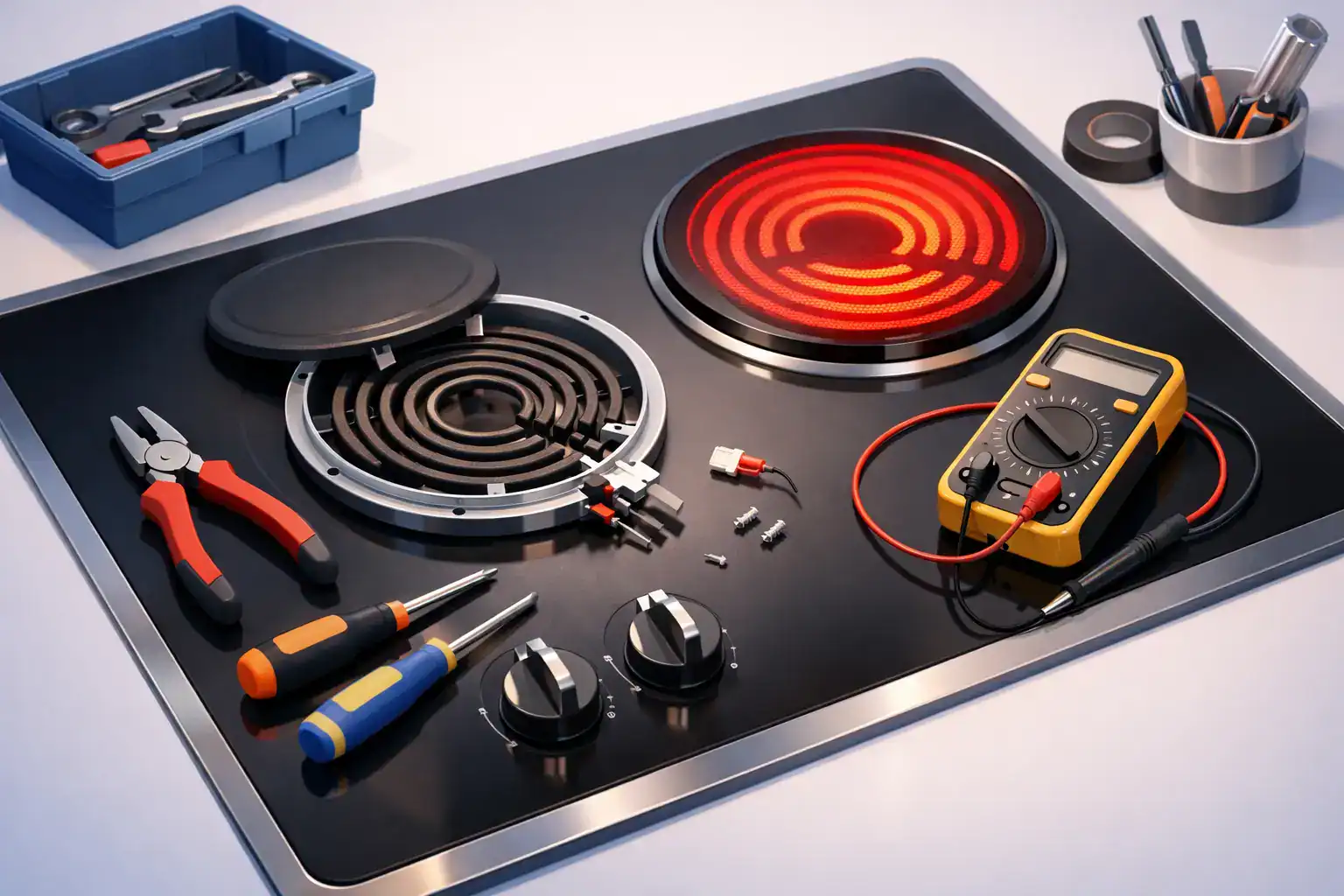
Electric coil ranges are less common in newer kitchens but remain practical and repairable. Their drip pans and elements need periodic cleaning, and a coil that does not heat evenly or sits loosely may need service or replacement.
Repairs: What Usually Goes Wrong?
Every stove has parts that wear with use. On electric ranges, common concerns include burners that will not heat, a cracked glass top, a faulty bake or broil element, inaccurate oven temperatures, failed control boards, and damaged door gaskets. If an oven takes too long to preheat or burns food on one side, the issue may be an element, sensor, relay, or calibration problem rather than a reason to replace the entire appliance.
Gas ranges can develop ignition problems, weak or uneven flames, clogged burner ports, faulty igniters, oven temperature issues, or control failures. A gas burner that keeps clicking after it lights may have moisture or debris around the igniter, though it can also point to a component that needs professional diagnosis.
Avoid taking apart gas connections or attempting electrical repairs inside a range without the right training. A qualified technician can identify whether a repair is sensible, explain the expected cost, and help you avoid replacing a stove when a dependable fix is available. Don Fuller’s Appliance Repair has helped Oklahoma households restore both gas and electric cooking appliances with practical, in-home service.
Which Stove Is Right for Your Household?
Choose gas if you value visible flame control, already have a safe gas connection, and enjoy cooking methods that benefit from immediate heat changes. Choose a traditional electric range if your kitchen is wired for it, you want a straightforward appliance with a smooth cooktop option, or you bake often and prefer electric oven performance. Consider induction if speed, efficiency, and a cooler cooking surface are priorities and you are comfortable confirming that your cookware is compatible.
If your current stove is acting up, do not assume a replacement is your only path. A burner that will not light, an oven that runs cold, or a cooktop with one dead element can disrupt a busy week, but it may also be a repairable issue. Getting a clear diagnosis first gives you the information to make a confident decision for your kitchen and your budget.