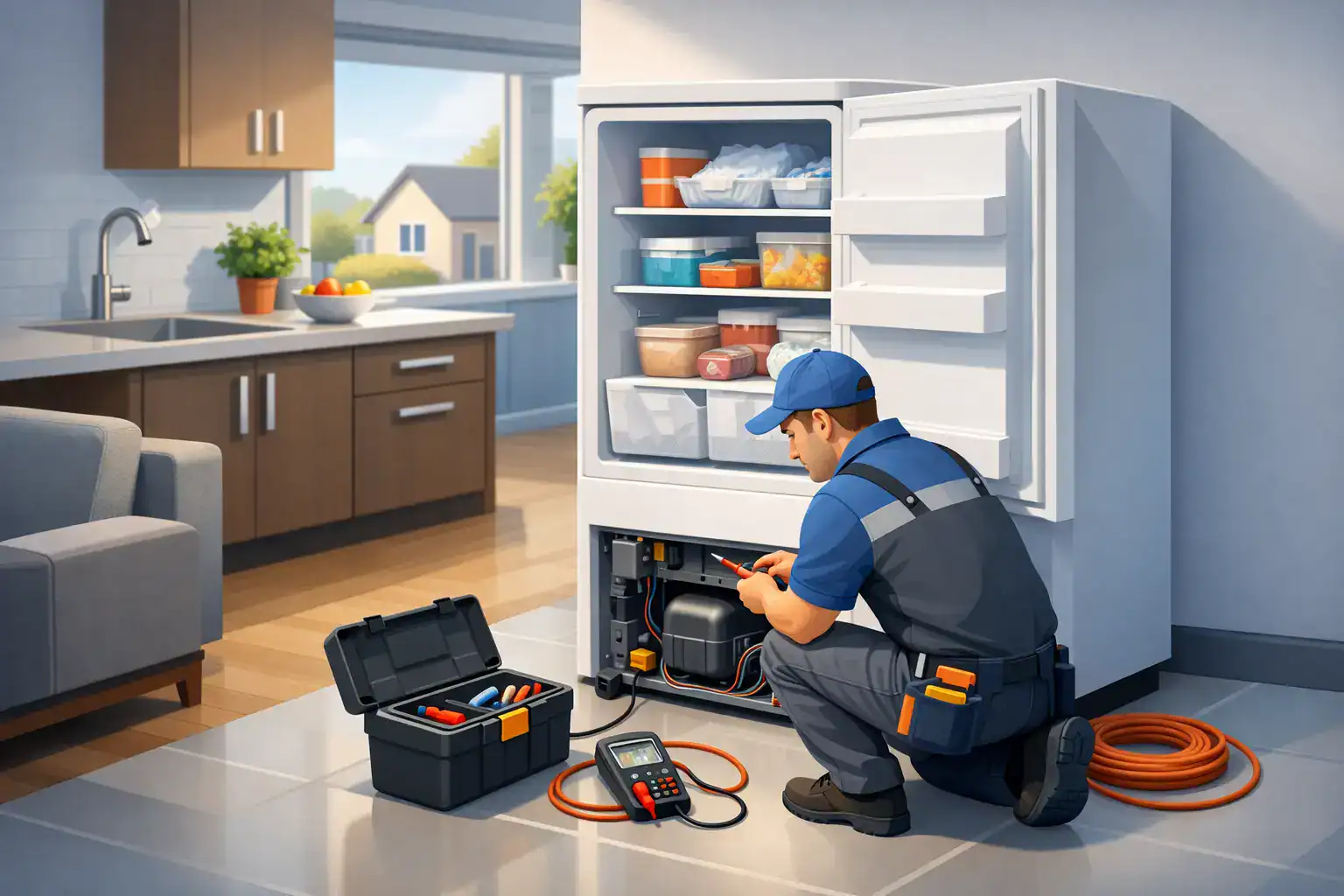
A refrigerator that suddenly feels warm is more than an inconvenience. It can mean spoiled groceries, a disrupted family routine, and a race to protect food before it becomes unsafe. The compressor is often the first part homeowners suspect, but several other refrigerator components can create similar symptoms. Knowing how to spot refrigerator compressor problems can help you act quickly without guessing or attempting an unsafe repair.
The compressor is the refrigerator’s pump. It circulates refrigerant through the sealed cooling system, moving heat out of the refrigerator and freezer compartments. When it cannot do its job, the appliance may run constantly, cool poorly, or stop cooling altogether. Because compressor and sealed-system work require specialized tools and training, the goal is not to diagnose it yourself with certainty. The goal is to recognize the warning signs and know when professional service is the smart next step.
Common Signs of Refrigerator Compressor Problems
A compressor problem often develops gradually, although some failures happen without much warning. Pay attention to changes in cooling performance, sounds, and how often the refrigerator runs.
The refrigerator is warm but the lights still work
Interior lights only confirm that the refrigerator has power. They do not confirm that the compressor is running or that the cooling system is working. If the fresh-food section is warmer than normal, the freezer is softening ice cream, or frozen food is beginning to thaw, treat it as an urgent issue.
Start by checking the temperature setting and making sure vents inside the refrigerator are not blocked by food containers. If the controls are set correctly and airflow is clear, a warm refrigerator may be dealing with a failed compressor, a start relay issue, a condenser fan problem, or a refrigerant leak. Each needs a proper diagnosis.
You hear clicking, humming, or repeated starting attempts
Most refrigerators make a low, steady hum when the compressor is operating. A brief click followed by silence, especially if it repeats every few minutes, can mean the compressor is trying and failing to start. Homeowners sometimes describe this as a hum-click pattern.
A bad start relay or overload protector can create the same sound, and those parts are generally less involved to repair than a failed compressor. That is why sound alone is not enough to identify the cause. It is, however, a good reason to schedule service before the refrigerator quits cooling completely.
The compressor area is unusually hot
The compressor sits near the bottom rear of many refrigerators, behind a lower access panel. It is normal for this area to feel warm during operation. It should not be so hot that you cannot comfortably keep your hand near the area, and you should never touch exposed electrical connections or hot components.
Excessive heat can happen when the compressor is overworking. Dirty condenser coils, poor ventilation, a failed fan, or a sealed-system issue may be the reason. In Oklahoma’s hot summers, refrigerators already work harder, particularly in garages, utility rooms, or kitchens with limited airflow. Extra heat around the unit deserves attention when it is paired with poor cooling or unusual noises.
The refrigerator runs almost all the time
A refrigerator will run longer after groceries are added, doors are opened frequently, or the room is very warm. But it should still cycle off periodically. If yours seems to run day and night and cannot maintain a safe temperature, the compressor may be struggling.
Before assuming the worst, check for a damaged door gasket, doors that are not closing fully, heavy frost buildup, dirty coils, and insufficient clearance around the appliance. These issues can make a healthy compressor work overtime. If those basics look fine, a technician can determine whether the compressor, fan system, defrost system, or sealed refrigerant system is responsible.
Your freezer is cold but the refrigerator section is warm
This symptom does not automatically point to a compressor. In many refrigerators, one cooling system supplies both compartments. A failed evaporator fan, blocked air passage, frost-covered evaporator, or stuck air damper is often more likely when the freezer is cold but the refrigerator compartment is warm.
Still, uneven cooling should not be ignored. Food in the refrigerator compartment should stay at or below 40 degrees Fahrenheit. Use a refrigerator thermometer if possible rather than relying on how cool the air feels.
What You Can Safely Check Before Calling for Service
A few simple checks can provide useful information and may uncover a basic issue. Unplug the refrigerator before removing any access panel or cleaning around electrical components. Do not attempt to recharge refrigerant, bypass a relay, or open the sealed system. Those jobs are not DIY repairs.
First, confirm the controls have not been changed accidentally. Then inspect the door seals for cracks, gaps, or food debris that prevents a tight closure. Clean dusty condenser coils if they are accessible and your refrigerator’s design allows safe cleaning. Coils are commonly located beneath the refrigerator or on the back, depending on the model.
Next, listen from a normal standing position. Is there a steady hum? A repeated click? Is the condenser fan running near the compressor area on models equipped with one? Note what you hear and when it happens. Also check whether the freezer has heavy frost on its back interior panel, which can suggest an airflow or defrost problem rather than a compressor failure.
Avoid pulling the refrigerator far from the wall while it is plugged in, especially if the water line or power cord may be strained. If you smell burning insulation, see smoke, hear loud electrical popping, or notice a damaged power cord, unplug the appliance if it is safe to do so and arrange service promptly.
Why Compressor Symptoms Can Be Misleading
A refrigerator compressor is one of the more expensive components to replace, so an accurate diagnosis matters. Several less costly problems can look like compressor trouble. A failed start device may keep a good compressor from starting. A dirty condenser coil may cause overheating. A malfunctioning fan may prevent heat from leaving the system. A control board or temperature sensor can also tell the refrigerator to run incorrectly.
A trained appliance technician checks the appliance as a complete system. That includes airflow, fans, electrical components, temperature readings, compressor operation, and the sealed system. This approach helps prevent replacing a major part when a smaller repair is the real solution.
It also helps homeowners make an informed repair decision. The refrigerator’s age, brand, condition, warranty coverage, and the nature of the failure all matter. A compressor repair can be worthwhile on a newer, otherwise reliable refrigerator. On an older unit with multiple issues, replacement may make more practical sense. Honest advice should account for the whole appliance, not just one symptom.
Protect Your Food While You Wait
If your refrigerator is not holding temperature, move perishable food to a working refrigerator, freezer, or cooler with ice as soon as possible. Keep refrigerator and freezer doors closed as much as you can. An unopened refrigerator can generally keep food cold for about four hours, while a full freezer holds a safe temperature longer than a partly filled one. Conditions vary, so use a food thermometer and discard items that have been held above safe temperatures for too long.
Do not rely on smell or appearance alone to judge whether perishable food is safe. When in doubt, it is safer to throw it out. Taking action early may save much of your grocery bill and reduce the stress of a sudden appliance breakdown.
When to Schedule Refrigerator Repair
Schedule professional refrigerator service when cooling is weak, the appliance clicks repeatedly, the compressor area is excessively hot, or the refrigerator runs continuously without reaching the selected temperature. Service is especially urgent if food is warming, the freezer is thawing, or you notice burning odors.
For homeowners in Edmond, Oklahoma City, and nearby communities, Don Fuller’s Appliance Repair can help identify the cause and explain the repair options clearly. A prompt diagnosis can often separate a compressor concern from a fan, relay, defrost, or airflow issue before the problem grows more disruptive.
Your refrigerator does not need to be completely dead before it deserves attention. Trust the changes you notice, protect your food, and get a qualified technician involved while there is still time to preserve your routine.