A refrigerator that suddenly stops cooling or a dryer that will not heat can disrupt a household fast. This major appliance lifespan guide gives Oklahoma homeowners a practical way to judge what is normal wear, what may be worth repairing, and when replacement is the more sensible investment.
Appliance life is never a fixed promise. Brand, installation quality, maintenance, water conditions, daily use, and past repairs all affect the outcome. A lightly used appliance in a one- or two-person home may run well beyond the average, while a hard-working family appliance may need attention sooner. The goal is not to replace equipment just because it reaches a certain birthday. It is to make a clear decision based on condition, cost, and reliability.
Major Appliance Lifespan Guide: Expected Years
These ranges are useful planning tools, not expiration dates. An experienced technician can often extend the life of an appliance when the rest of the unit is in good condition.
Refrigerators and Freezers: 10 to 15 Years
Refrigerators commonly last 10 to 15 years, while standalone freezers often fall in a similar range. Clean condenser coils, good door gaskets, and enough clearance for airflow can make a meaningful difference. Oklahoma garages can be especially tough environments for refrigerators and freezers because summer heat forces the compressor to work harder.
Warning signs include food that is not staying cold, frost buildup, a noisy compressor, water leaks, or an ice maker that repeatedly fails. A failed fan motor, defrost component, water valve, or door seal can often be repaired. If an older unit has compressor trouble, multiple cooling issues, or expensive sealed-system work, replacement may be the better choice.
Washers: 10 to 14 Years
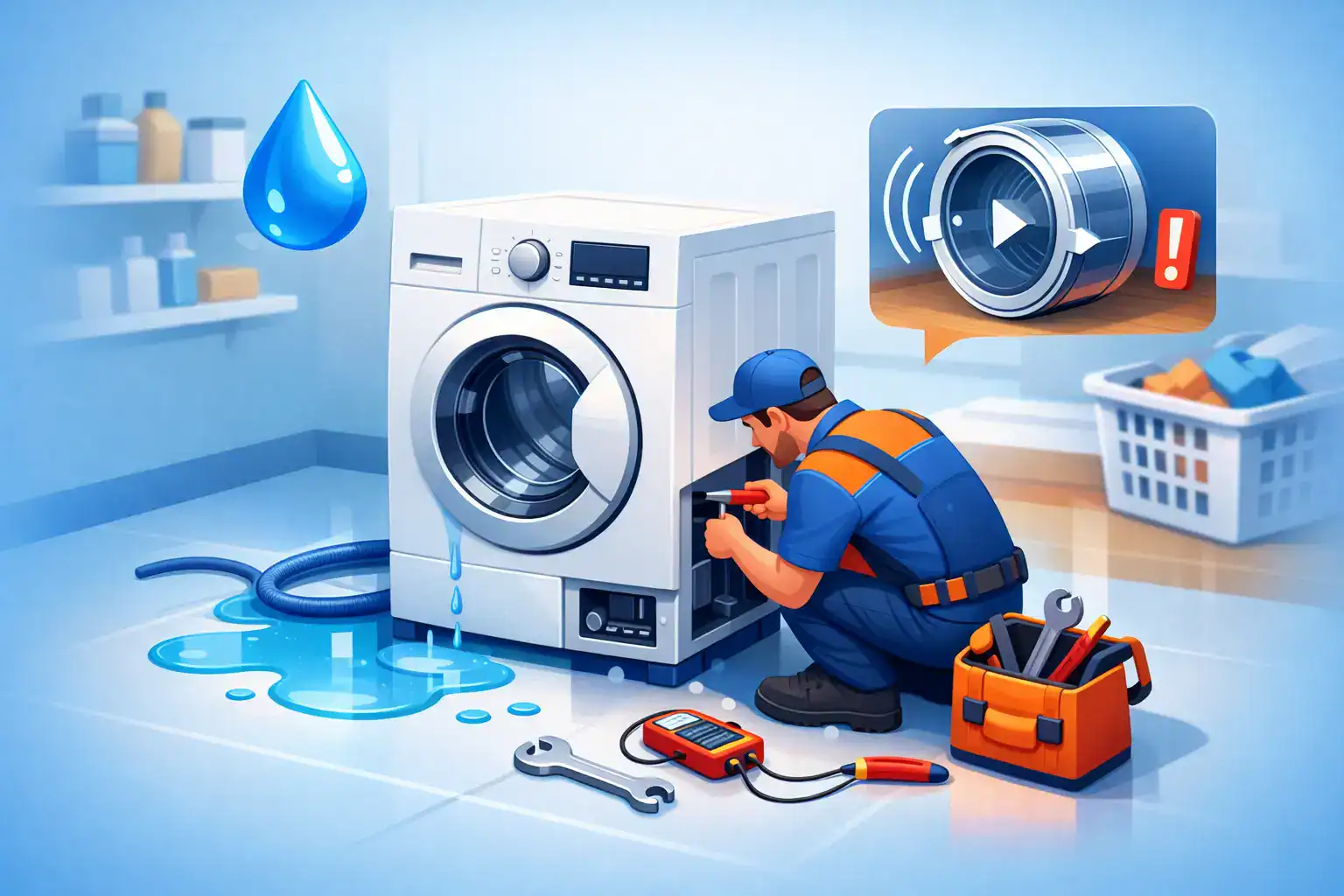
A quality washing machine may provide 10 to 14 years of service. Front-load and top-load models have different strengths, but both benefit from using the correct amount of detergent, avoiding frequent overloads, and addressing small leaks early.
A washer that will not drain, spin, fill, or unlock may have a repairable problem with a pump, lid switch, hose, belt, valve, or control component. Loud banging during a spin cycle, however, can point to worn suspension parts, a damaged tub support, or an unbalanced installation. The repair decision depends on the diagnosis, not just the noise.
Dryers: 10 to 13 Years
Dryers often last 10 to 13 years, and many heating or tumbling problems are repairable. A dryer that takes two or three cycles to dry clothes is not always failing internally. Restricted venting is a common cause, and it creates a fire risk as well as wasted energy.
Have the lint screen cleaned after every load and the full vent path inspected and cleaned regularly. If the dryer runs but has no heat, a heating element, thermal fuse, igniter, gas valve component, or thermostat may be involved. Professional diagnosis matters because electric and gas dryers have different safety considerations.
Dishwashers: 9 to 12 Years
Most dishwashers last about 9 to 12 years. Hard water, detergent buildup, food debris, and worn door seals can shorten that timeline. Cleaning the filter and checking the spray arms helps protect wash performance.
Poor cleaning results, standing water, leaks, or a door that will not latch do not automatically mean it is time for a new dishwasher. Pumps, inlet valves, seals, racks, and latches can frequently be repaired. But if a dishwasher is near the end of its expected range and needs several costly components at once, replacement may offer more dependable long-term value.
Ranges, Ovens, and Cooktops: 13 to 15 Years
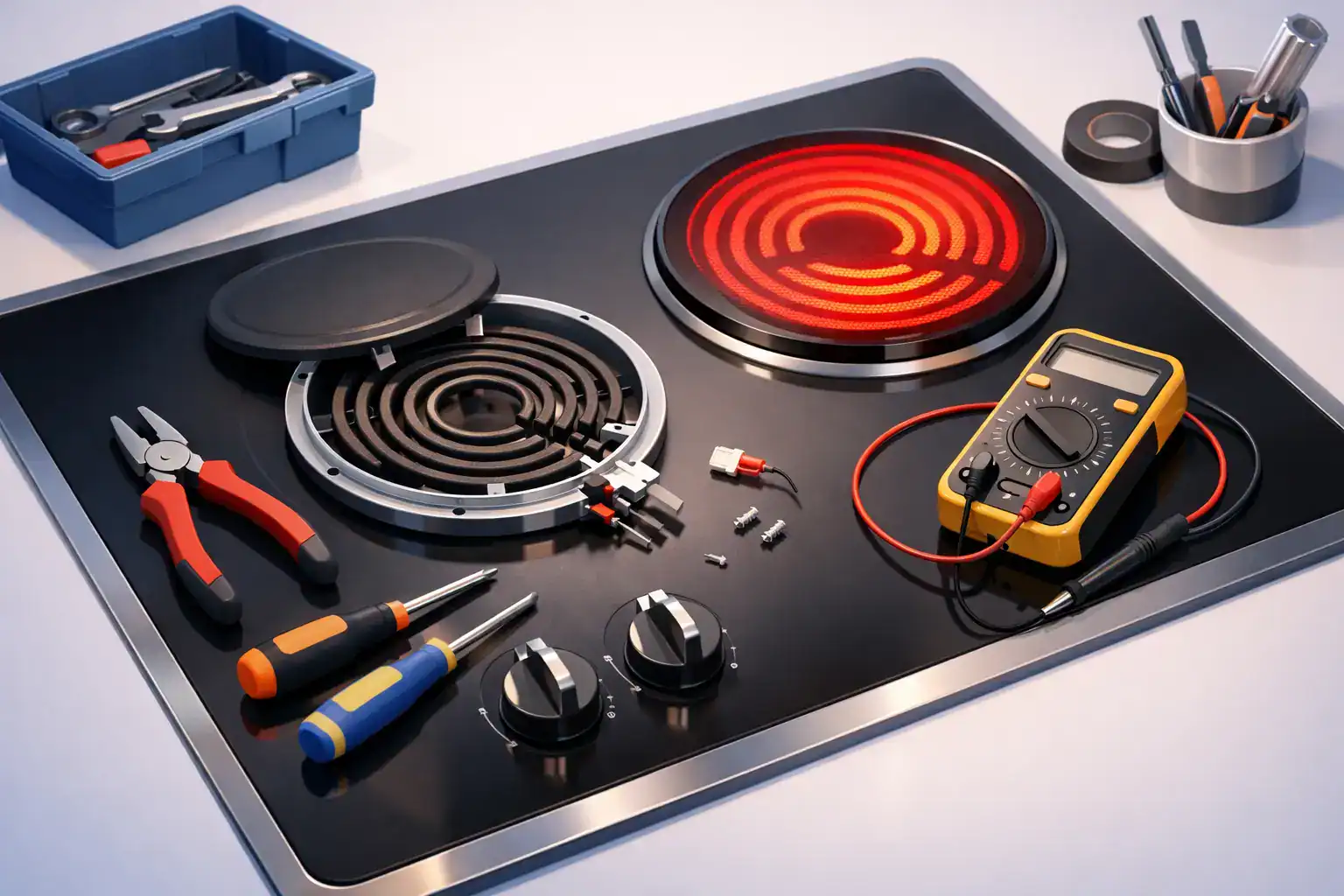
Gas and electric cooking appliances can often serve a household for 13 to 15 years, sometimes longer. Their simpler mechanical design can make certain repairs worthwhile even on older equipment. Oven temperature problems, failed burners, broken igniters, damaged bake elements, and faulty door hinges are common service issues.
Do not ignore a gas odor, repeated ignition clicking, a sparking issue, or an oven that will not shut off. These problems call for prompt professional service. For electric ranges, a burner that stays hot or a tripping breaker also deserves immediate attention.
Microwaves: 7 to 10 Years
Microwaves generally have a shorter life expectancy of 7 to 10 years. Door switches, turntables, lights, displays, and control panels may be repairable. A microwave that runs but does not heat can involve high-voltage components that should not be handled as a do-it-yourself project.
For a built-in or over-the-range microwave, repair can be particularly appealing because replacement may involve cabinet fit, mounting, and ventilation considerations. The right decision depends on the appliance’s age, features, and the specific failed part.
Garbage Disposals and Ice Machines: 8 to 12 Years
Garbage disposals typically last 8 to 12 years. Leaks from the bottom of the unit often indicate internal seal failure and can make replacement more practical. Jams, drain issues, or humming without grinding may have other causes that can be evaluated.
Home ice machines vary widely by type and use, but 8 to 12 years is a reasonable general range for many residential units. Scale buildup and water-quality issues can affect performance, so regular cleaning and proper maintenance are especially valuable.
When Repair Makes Better Financial Sense
Age matters, but it should not be the only factor. A seven-year-old refrigerator with a failed fan motor is very different from a 14-year-old refrigerator with a failing compressor and recurring temperature problems. The first may have many useful years left after a repair. The second may be approaching a point where additional spending becomes difficult to justify.
A repair is often a good value when the appliance is within or below its expected lifespan, has been reliable until now, and needs one clearly identified component. Repair is also worth considering when replacement would require changes to cabinetry, electrical connections, gas lines, or plumbing.
Replacement becomes more reasonable when repair costs are a large share of a comparable new appliance, when several major parts are failing, or when the unit has become unreliable enough to interfere with daily life. Energy savings may matter too, especially for older refrigerators or freezers that run continuously. Still, a new model is not automatically the best bargain if a straightforward repair can restore a dependable appliance for a fraction of the cost.
What Shortens Appliance Life
Many early failures begin with small conditions that go unnoticed. Appliances need room to ventilate, level installation, secure water and drain connections, and routine cleaning. Slamming doors, overloading washers, packing refrigerators too tightly, and skipping vent maintenance all add strain over time.
Pay attention to changes rather than waiting for a complete breakdown. New noises, longer cycles, inconsistent temperatures, puddles, burning smells, or a sudden increase in utility use are all reasons to schedule an inspection. Catching a worn belt, loose hose, blocked vent, or weak door gasket early can prevent a bigger repair later.
Avoid guessing with electrical, gas, high-voltage, or sealed refrigeration problems. Turning an appliance off when it is unsafe or leaking can limit damage, but a qualified diagnosis identifies the actual cause and helps you avoid paying for the wrong solution.
A Practical Plan for Oklahoma Homeowners
Keep the model and serial numbers for your major appliances in one easy-to-find place, along with receipts for significant repairs. This makes it easier to check age, warranty coverage, and parts availability when something goes wrong. It also helps a technician arrive prepared to diagnose the issue efficiently.
For busy households in Edmond, Oklahoma City, and nearby communities, the best approach is usually simple: maintain what you have, address warning signs promptly, and request a clear explanation before choosing repair or replacement. Don Fuller’s Appliance Repair has helped local families make those decisions for more than 52 years with professional diagnosis and straightforward service.
Your appliances do not need to be brand-new to be dependable. With timely care and an honest assessment when trouble starts, many of the machines that keep your home moving can continue serving your family well.