Dinner is planned, the oven is preheating, and then something feels off: the display stays dark, the temperature never climbs, or the kitchen starts filling with smoke. The most common oven problems often show up at the worst possible time, but the symptom can provide a useful clue about what is happening. Some issues have a simple, safe check homeowners can make. Others involve electricity, gas, high heat, or internal components that should be handled by an experienced appliance technician.
Most Common Oven Problems Homeowners Notice
The oven will not turn on
When an oven will not turn on at all, start with the basics. Check that the range is plugged in securely and that the breaker has not tripped. Electric ranges commonly use a double-pole breaker, so one side may trip even if the clock or cooktop still has power. Resetting a tripped breaker once is reasonable. If it trips again, leave it off and schedule service rather than repeatedly resetting it.
On a gas range, the display and controls still need electricity, so a power problem can keep the oven from operating even though gas service is available. A failed control board, damaged wiring, faulty thermostat, or failed safety component can also prevent startup. If you smell gas, do not try to light or operate the oven. Leave the area, avoid switches and open flames, and contact your gas provider or emergency services as appropriate.
The oven heats, but food cooks unevenly
A pan of cookies that browns on one side while the other side stays pale is more than an annoyance. Uneven cooking may mean the oven temperature is inaccurate, but it can also point to a weak bake element, broil element, igniter, convection fan, or temperature sensor.
Before assuming a repair is needed, make sure oven racks are positioned correctly and cookware is not blocking air circulation. Dark pans, crowded racks, and opening the door frequently can change results. If the problem continues across different meals and rack positions, the oven should be tested. A technician can measure actual temperatures and determine whether the issue is calibration or a failing part.
The oven takes too long to preheat
Most ovens need time to preheat, especially larger models. Still, if a familiar oven suddenly needs far longer than usual, it deserves attention. Electric ovens typically rely on one or more heating elements. An element can glow and still be too weak to produce the heat needed for proper preheating.
Gas ovens depend on an igniter to open the gas valve and light the burner. A worn igniter is a frequent reason a gas oven heats slowly or reaches only a low temperature. Because gas ignition and electrical testing require the right tools and safety procedures, this is usually a professional repair.
The oven temperature is too high or too low
If a recipe calls for 350 degrees but casseroles remain cold in the center or baked goods burn around the edges, temperature accuracy may be the issue. An oven thermometer can help identify a pattern, but allow the oven enough time to cycle. Oven temperatures naturally rise and fall slightly around the selected setting rather than holding one exact number every second.
A consistent difference of 25 degrees or more may indicate a sensor, thermostat, control board, or heating problem. Some modern ovens offer a calibration setting, but calibration is not a cure for a component that is failing. If the temperature varies wildly or ignores the selected setting, turn the oven off and arrange a diagnosis.
The heating element is not working
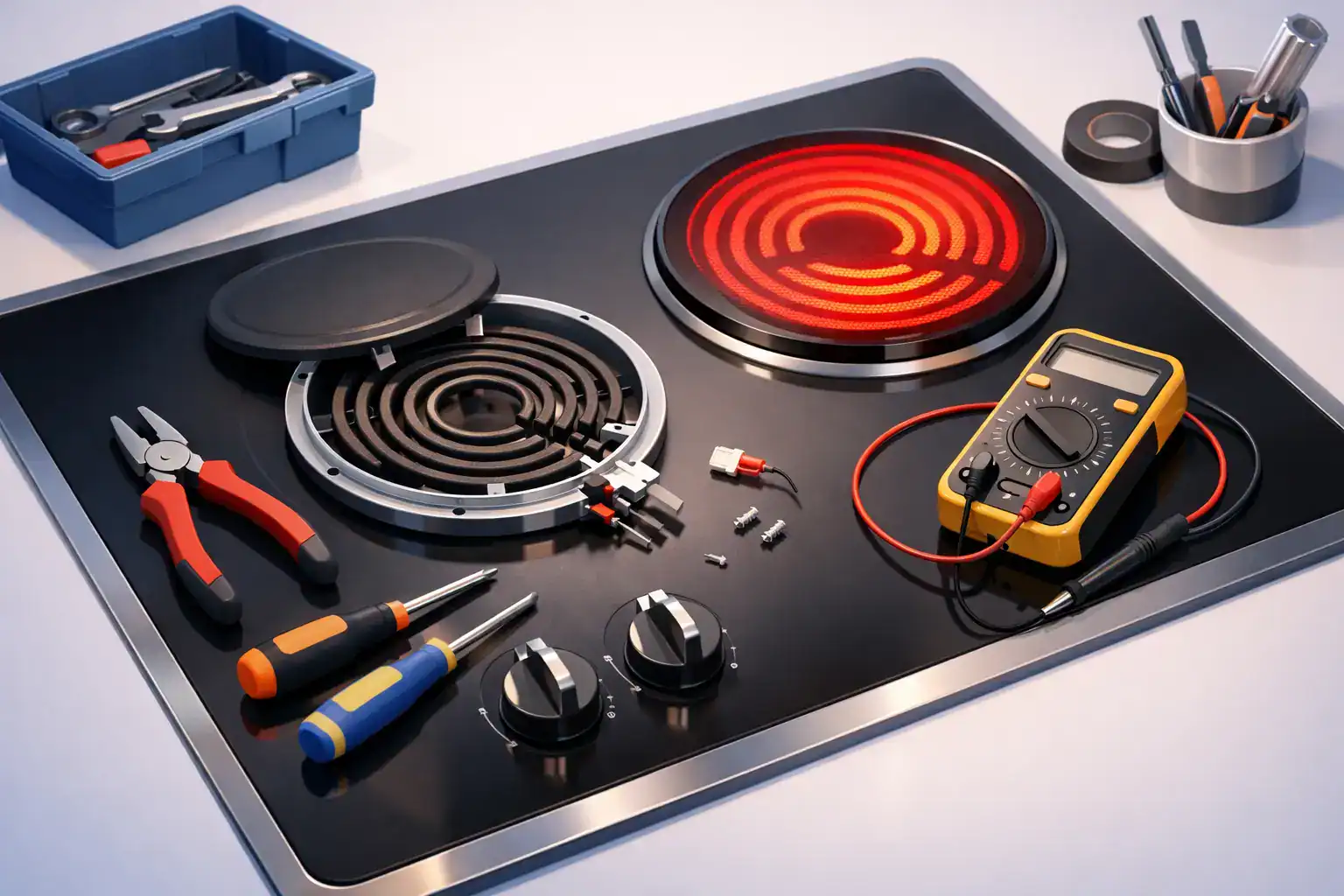
In an electric oven, a damaged bake or broil element may have visible blisters, cracks, burn marks, or spots that do not heat. You may notice that broiling no longer works, the bottom of food is undercooked, or the oven heats only from the top.
Do not touch or attempt to remove an element while the appliance has power. Even a range that appears off can present an electrical hazard. Replacing an element may sound straightforward, but the correct part, proper installation, and inspection of its wiring all matter. A shorted element can also damage other components.
The gas oven will not ignite
A gas oven may click without lighting, take several attempts to ignite, or glow without producing heat. These symptoms often involve the igniter, burner assembly, gas valve, or related wiring. Food debris or spills around the burner can sometimes contribute, but cleaning should be limited to cool, accessible surfaces and done according to the manufacturer’s instructions.
Any repeated ignition failure should be treated seriously. Never use a match or lighter to force-light a gas oven unless the manufacturer specifically provides safe instructions for your model. Gas appliances need careful diagnosis to protect your home and family.
The oven door will not close, unlock, or seal properly
A door that does not seal can let heat escape, extend cooking times, and strain the oven as it tries to maintain temperature. Worn door gaskets, loose hinges, broken springs, or a bent latch may be responsible. Avoid slamming the door or forcing it shut, as this can make hinge and glass damage worse.
A door locked after a self-clean cycle is another common call. Allow the oven to cool completely first. If it remains locked after cooling, the lock assembly or control may have failed. Do not pry the door open. Modern oven doors and locks are designed as safety systems, and forcing them can create a larger repair.
The oven smokes or has a burning smell
A small amount of odor during the first use of a new oven or after a thorough cleaning can be normal. Persistent smoke, however, should not be ignored. Spills on the oven floor, grease buildup, and food residue are common causes. Once the oven is completely cool, clean only as directed in the owner’s manual.
If smoke continues after cleaning, you see sparks, or the smell resembles melting plastic or burning electrical wiring, turn the oven off at the controls and breaker if it is safe to do so. Do not use the self-clean setting to solve an active smoking or electrical problem. High self-clean temperatures can put added stress on components that are already compromised.
The control panel, clock, or display is acting strangely
Flashing error codes, unresponsive buttons, a blank display, or a clock that resets can make an otherwise functional oven difficult to use. Occasionally, a brief power interruption is the cause. You can try turning the appliance breaker off for a few minutes and restoring power once.
If the error returns, write down the code and the circumstances in which it appeared. A technician can use that information during diagnosis. Repeated resets may erase useful clues and will not repair a failing touchpad, wiring connection, sensor, or electronic control board.
When to Stop Troubleshooting and Call for Oven Repair
Homeowners can safely check the breaker, confirm the oven settings, inspect accessible areas for spills, and review the owner’s manual. Beyond that, oven repair can involve live electrical circuits, gas connections, sharp sheet metal, and components that remain hot long after the appliance is turned off.
Call for professional help promptly if you smell gas, see sparks, experience repeated breaker trips, notice a burning-wire odor, or have an oven that will not regulate temperature. It is also wise to schedule service when a problem is recurring, even if the oven eventually works. Intermittent failures often become complete breakdowns when you need the appliance most.
For homeowners in Edmond, Oklahoma City, and surrounding communities, Don Fuller’s Appliance Repair can diagnose oven problems clearly, explain practical repair options, and help restore a dependable kitchen routine. Having the model number, a description of the symptom, and any error code ready can make the appointment more efficient.
A reliable oven is easy to take for granted until a weeknight meal, holiday gathering, or batch of cookies depends on it. Addressing unusual heat, delayed ignition, or electrical symptoms early can help protect your appliance, your schedule, and the comfort of your home.