A cold oven at dinnertime is more than an inconvenience. Whether you are trying to bake a weeknight meal, prepare for guests, or keep a family routine on track, an oven not heating can bring the kitchen to a standstill. The good news is that some causes are simple to identify. Others require a trained technician because they involve high voltage, gas components, or internal controls.
Before assuming the appliance needs to be replaced, take a few safe steps to narrow down the problem. Many ovens can be repaired with the right diagnosis and replacement part.
Start With the Simple Checks
First, confirm that the oven is set to the correct cooking mode. It sounds obvious, but it is easy to select a timer, delay-start setting, or warming function instead of Bake. Set the oven to Bake at 350°F and allow it 10 to 15 minutes to begin heating.
Next, look at the display and clock. Some models will not operate normally if the clock is flashing after a power outage or if a control lock is active. Resetting the clock or turning off the control lock may restore normal operation.
For an electric oven, check the home’s breaker panel. An electric range typically uses a double-pole breaker. It is possible for one side of that breaker to trip, leaving the display, clock, or cooktop working while the oven cannot heat correctly. Turn the range breaker fully off, then back on once. If it trips again, do not keep resetting it. That points to an electrical issue that needs professional attention.
If you have a gas oven, make sure the gas supply valve is open and that other gas appliances in the home are operating as expected. A gas odor, hissing sound, or suspected gas leak is not a troubleshooting situation. Leave the area, avoid switches and open flames, and contact your gas utility or emergency services as appropriate.
Why Is My Oven Not Heating?
The symptom matters. An oven that stays completely cold has a different likely cause than one that warms slowly, burns food, or never reaches the temperature shown on the display.
Failed bake element in an electric oven
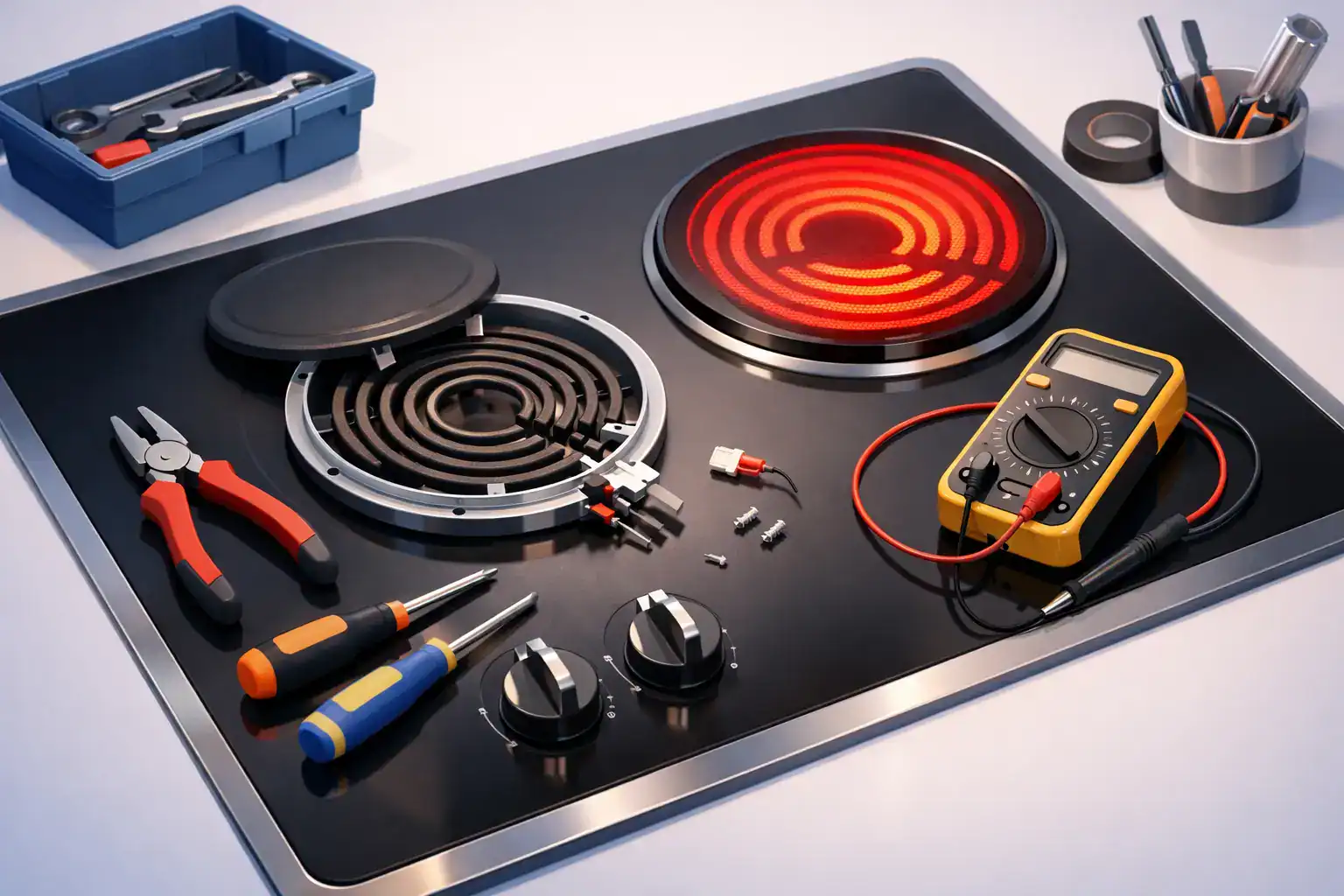
The bake element is the heating coil located along the bottom of many electric ovens. It does most of the work during standard baking. When it fails, the oven may not heat at all, may heat only under Broil, or may take far too long to preheat.
With the power off, you can visually inspect the element for obvious blistering, cracks, burned spots, or areas that have separated. Do not touch or remove the element unless you are comfortable working safely around appliance electrical connections. A failed element is often repairable, but the correct part and a proper diagnosis are important.
Bad broil element or heating circuit
The upper broil element also plays a role in many electric ovens. Some models use both elements during preheat, then cycle them to maintain temperature. If the broil element, wiring, relay, or control circuit fails, the oven may preheat poorly or cook unevenly even though the lower element still looks normal.
This is one reason a visual inspection alone does not always provide the answer. A technician can test continuity, voltage, and the components that control the heating cycle.
Weak or failed igniter in a gas oven
Most modern gas ovens use a hot-surface igniter. When you choose Bake, the igniter should glow and draw enough electrical current to open the gas safety valve. If it is too weak, the igniter may glow but the burner will not light. The oven may also heat slowly, fail intermittently, or take an unusually long time to preheat.
Because gas ignition involves both electrical and fuel-system components, it is best handled by a qualified appliance repair technician. Replacing the wrong component can waste money and leave the original problem unresolved.
Faulty temperature sensor or thermostat
If your oven heats but runs too hot, too cool, or takes much longer than usual, the temperature sensor may be sending incorrect information to the control. The sensor is usually a slim metal probe inside the oven cavity, often near the back wall.
An oven thermometer can help confirm that there is a temperature problem, but do not expect a household thermometer to match the display exactly at every moment. Ovens naturally cycle above and below the target temperature. What matters is whether the average temperature is consistently far off or whether food is repeatedly undercooked or overcooked at familiar settings.
Control board, relay, or wiring problem
Electronic control boards tell the oven when to heat and when to stop. Relays on the board send power to heating elements or ignition components. A failed relay, damaged wire, burned terminal, or faulty control board can prevent heating even when the elements and igniter appear fine.
These failures often require electrical testing and access to internal parts. They can also create repeat breaker trips, error codes, or intermittent operation. This is not a good area for trial-and-error part replacement.
Safe Things You Can Do Before Scheduling Repair
A few details can make diagnosis faster and help you describe the issue clearly when you schedule service. Note whether the cooktop works, whether Broil works, whether the oven display shows an error code, and whether the problem began after a power outage or self-clean cycle.
Also pay attention to timing. Does the oven stay cold? Does it reach 200°F but not 350°F? Does it take 30 minutes or more to preheat? Does it heat normally once, then fail the next time? These details help separate an element or igniter issue from a sensor, control, or wiring concern.
Avoid using extension cords, repeatedly resetting breakers, bypassing door switches, or trying to light a gas oven manually. Do not run the self-clean cycle in hopes that it will fix a heating problem. High self-clean temperatures can place additional strain on already-failing components.
When to Call for Oven Repair
Schedule service promptly if the breaker trips repeatedly, the oven smells like burning wiring, a gas burner will not ignite, or the appliance displays an error code. You should also call when the oven is consistently underheating, overheating, or cooking unevenly after basic settings and breaker checks.
Repair is often the practical choice when the range is otherwise in good condition and the problem is limited to a heating element, igniter, sensor, switch, or related control component. Replacement may make more sense for an older appliance with multiple major problems, unavailable parts, or a repair cost that approaches the value of a comparable new model. The right answer depends on the appliance’s age, condition, and diagnosis – not just the first symptom you notice.
For homeowners in Edmond, Oklahoma City, and nearby communities, Don Fuller’s Appliance Repair can help identify the actual cause and explain the repair options clearly. A professional visit can save time, prevent unnecessary parts purchases, and get your kitchen back to normal sooner.
Common Questions About an Oven That Will Not Heat
Can an oven be on but not heat?
Yes. The display, light, clock, and even the cooktop can work while the oven heating circuit has failed. A bad bake element, igniter, relay, sensor, or control board can all cause this symptom.
Why does my oven take so long to preheat?
Slow preheating may point to a weak gas igniter, a failed electric element, a problem with the broil circuit, or inaccurate temperature sensing. If preheat times have changed noticeably, a repair diagnosis is worthwhile.
Is it safe to use the stovetop if the oven is not heating?
Sometimes, but it depends on the cause. If there is a burning smell, electrical issue, gas odor, or repeated breaker trip, stop using the entire appliance until it has been inspected. When in doubt, choose safety over getting one more meal cooked.
A dependable oven should make daily life easier, not turn dinner into a guessing game. If basic checks do not restore the heat, timely professional repair can protect your home, your schedule, and the meals you planned to share.