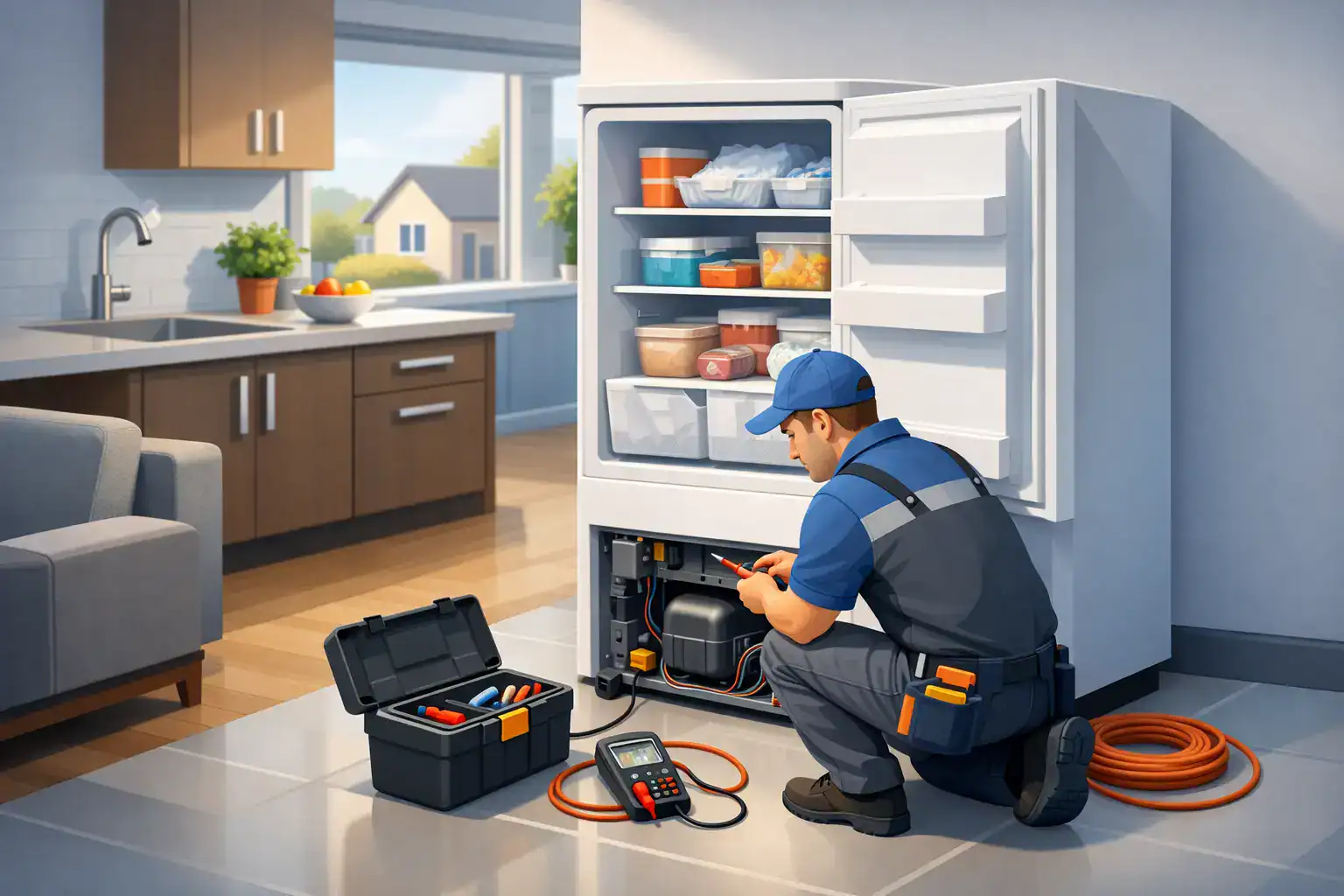
A refrigerator problem rarely waits for a convenient time. You may notice warm milk at breakfast, water on the kitchen floor after work, or a freezer full of softening food before a family dinner. When you need refrigerator repair Edmond OK homeowners can count on, knowing what to check first and when to call for help can protect your food, your floor, and your budget.
Some refrigerator issues have a simple cause. Others involve electrical components, sealed cooling systems, or hidden water connections that need professional diagnosis. The goal is not to guess at a repair. It is to get your kitchen back to normal safely and without paying to replace an appliance that may still have years of useful service ahead.
Common Signs You Need Refrigerator Repair in Edmond, OK
A refrigerator does more than keep food cold. It regulates temperature, circulates air, removes moisture, makes ice in many homes, and may dispense filtered water. When one part stops working correctly, the symptoms can show up in several ways.
Food that spoils sooner than expected is one of the clearest warning signs. Your refrigerator compartment should generally stay near 37 to 40 degrees Fahrenheit, while the freezer should remain around 0 degrees. If drinks are only slightly cool, leftovers feel warm, or frozen food is becoming soft, act quickly. Moving perishable food to a cooler may prevent waste while you arrange service.
Unusual sounds also deserve attention. A refrigerator will make normal operating sounds, including a low compressor hum, occasional clicks, and ice maker activity. Persistent buzzing, rattling, grinding, squealing, or loud knocking is different. Those sounds can point to a worn fan motor, compressor issue, ice maker problem, or something as basic as an appliance that is not sitting level.
Water pooling under or inside the refrigerator should not be ignored. The source may be a blocked defrost drain, a loose water line, a damaged door gasket, or a problem with the ice maker. Even a small leak can damage flooring or cabinetry over time, especially in kitchens with wood or laminate flooring.
Other signs that merit a service call include heavy frost buildup, a refrigerator that runs almost constantly, a freezer that is cold while the fresh-food side is warm, or an ice maker that has stopped producing ice. These problems are not all equally serious, but they do need a proper diagnosis before they become more expensive.
A Few Safe Checks Before You Call
Before scheduling repair, there are a few simple checks that can rule out an easy fix. Start by confirming that the refrigerator is plugged in securely and that the outlet has power. If the interior light is off, check the circuit breaker before assuming the appliance has failed.
Next, look at the temperature settings. A setting may have been bumped during cleaning, grocery unloading, or a child reaching for a snack. After making an adjustment, give the refrigerator several hours to stabilize. Opening the doors repeatedly during that time lets cold air escape and can make the appliance seem worse than it is.
Check the door seals as well. Close the door on a piece of paper and gently pull it out. If the paper slides out with little resistance in several spots, the gasket may not be sealing properly. Wipe away crumbs or sticky residue first. A cracked, warped, or loose gasket may need replacement.
It also helps to check the air flow around the appliance. Refrigerators need breathing room to release heat. Boxes, bags, or stored items pressed against vents can restrict circulation. Inside the refrigerator, avoid packing food so tightly that air cannot move between shelves. In the freezer, frost-covered vents can signal a defrost problem that should be inspected by a technician.
These checks are useful, but they have limits. Avoid removing rear panels, handling wiring, or trying to recharge refrigerant yourself. Modern refrigerators are complex appliances, and an incorrect repair can create a safety risk or turn a manageable issue into a larger one.
Why a Refrigerator May Run but Not Cool
One of the most frustrating problems is a refrigerator that sounds like it is working but is not keeping food cold. Because the lights are on and the unit is humming, it is easy to assume the problem is minor. That is not always the case.
The cause could be a failed evaporator fan, dirty condenser coils, a malfunctioning defrost system, a faulty thermostat or sensor, or a compressor-related issue. In some cases, the freezer may be cold while the refrigerator section is warm because cold air is not moving properly between compartments. Each of these repairs requires a different solution.
A technician can test components, inspect the airflow path, and identify whether repair makes practical sense. This matters because replacing parts based on a guess can be costly and may not solve the problem. Reliable service begins with finding the actual cause.
When dirty coils are the problem
Condenser coils release heat from the refrigerator. When they become coated in dust, pet hair, or kitchen debris, the appliance may work harder than necessary. This can contribute to poor cooling, increased energy use, and longer run times.
If your refrigerator model allows safe access to the coils, careful cleaning with a vacuum brush can help. Always unplug the unit first and follow the manufacturer guidance. If the appliance continues to run hot or cool poorly after cleaning, the issue may be more than dirty coils.
When the repair may be more involved
A sealed-system problem, compressor failure, or refrigerant leak requires professional equipment and experience. These repairs can be worthwhile, particularly for a newer or higher-end refrigerator, but the right choice depends on the appliance’s age, condition, brand, and repair cost.
An honest technician should explain the problem in clear terms and help you weigh repair against replacement. A minor component repair on a well-maintained refrigerator is very different from a major cooling-system repair on an appliance near the end of its expected life.
Protect Food and Your Home While You Wait
If your refrigerator is not cooling, keep the doors closed as much as possible. A closed refrigerator can hold a safe temperature for about four hours during a power outage, though the exact time depends on the room temperature and how often the door is opened. A full freezer can hold its temperature longer than a partially full one.
Move meat, dairy, leftovers, and other perishables to a cooler with ice if the refrigerator temperature is rising. When in doubt about food safety, it is better to discard food that has been held above 40 degrees Fahrenheit for too long. The cost of replacing groceries is frustrating, but foodborne illness is worse.
For leaks, place towels around the base of the appliance and remove nearby items from the floor. If water is actively flowing from a supply line, turn off the refrigerator’s water supply valve if you can locate it safely. Do not leave a significant leak unattended while waiting for service.
What to Expect From Professional Refrigerator Service
A dependable in-home repair visit should start with listening. The details you notice matter: when the issue began, whether the refrigerator was recently moved, whether the problem affects the freezer too, and whether you heard unusual noises or found water on the floor.
The technician should then inspect the appliance, test likely components, and explain the findings before moving forward with a repair. Clear pricing matters, especially when a refrigerator problem interrupts a busy household routine. You should understand what is being repaired, why it failed, and what the expected next steps are.
For Edmond homeowners, fast scheduling can make a real difference when food storage is at risk. Don Fuller’s Appliance Repair brings more than 52 years of local appliance service experience to refrigerator problems and works to provide same-day service when scheduling and parts availability allow. That combination of prompt response and careful diagnosis helps families make a confident decision instead of rushing into replacement.
Repair or Replace? The Answer Depends
There is no single age at which every refrigerator should be replaced. Many units can be repaired successfully, while others may no longer be a sensible investment. The decision depends on the type of failure, the price of the repair, the unit’s overall condition, and whether it has had repeated issues.
A refrigerator with a damaged door seal, failed fan motor, clogged drain, or ice maker issue may be an excellent repair candidate. On the other hand, an older unit with a major compressor or sealed-system failure may warrant a conversation about replacement, particularly if it has already needed several repairs.
The best next step is a straightforward assessment from a local professional who will explain the trade-offs. Your refrigerator is central to daily life, from weekday lunches to family meals and grocery planning. When it stops doing its job, timely help can bring order back to the kitchen and give you one less thing to worry about.