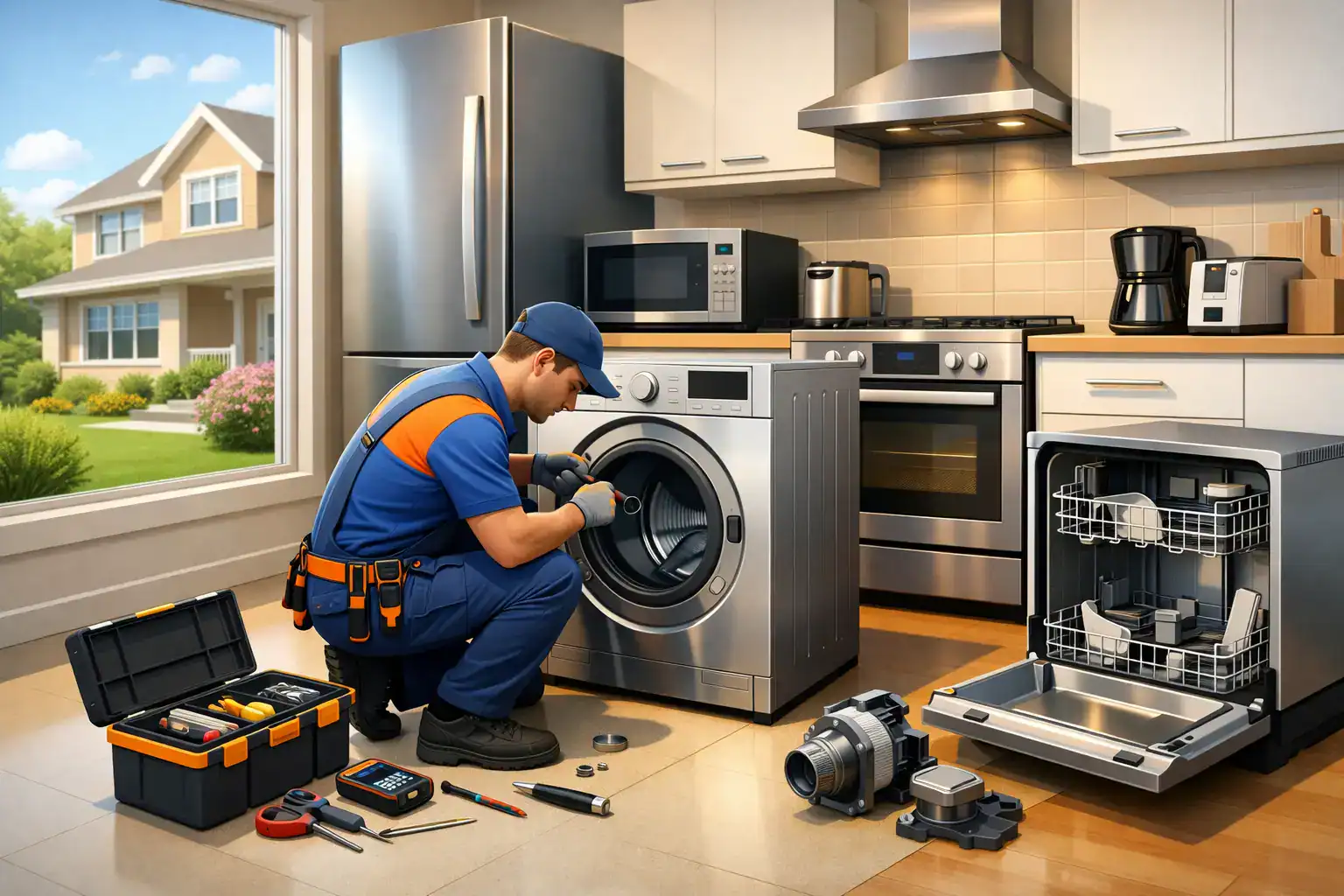
A washer that stops mid-cycle on a busy week is more than an inconvenience. It can leave towels soaked, clothes sitting in dirty water, and a household routine suddenly backed up. Knowing the signs of a failing washer can help you act before a small problem becomes water damage, a bigger repair, or an unexpected replacement.
Some washer problems are caused by a simple issue, such as an unbalanced load or a clogged drain hose. Others point to worn internal parts that need a trained technician. The difference matters, especially when your machine is leaking, making loud noises, or no longer cleaning clothes properly.
1. Your Washer Is Making New or Unusually Loud Noises
Washers make normal operating sounds: water filling the tub, the motor turning, and a steady hum during the spin cycle. What is not normal is loud banging, grinding, scraping, squealing, or repeated thumping that was not there before.
Banging often happens when a load is uneven, particularly with heavy items like blankets, bath mats, or jeans. Pause the cycle, redistribute the clothing, and try again. If the noise continues with a balanced load, the washer may have worn suspension components, damaged shock absorbers, a failing drive system, or a problem with the drum bearings.
Grinding or scraping deserves prompt attention. Continuing to run a washer with a failing bearing or damaged internal component can cause additional wear and turn a manageable repair into a more involved one.
2. It Shakes, Walks, or Moves Across the Floor
A little vibration during a high-speed spin is expected. A washer that rocks hard, rattles cabinets, or inches across the laundry room is not operating as it should.
First, make sure the washer is level and sitting firmly on all four feet. Check that it is not overloaded and that bulky items are spread evenly around the tub. Front-load and top-load machines can both become unstable when one heavy item holds most of the water.
If leveling and load adjustments do not solve the issue, internal suspension parts may be worn. This is one of the signs of a failing washer that homeowners should not ignore, since constant movement can strain water hoses, damage flooring, and loosen connections behind the machine.
3. Water Is Leaking Around or Under the Machine
A small puddle near the washer should always be investigated. The source may be as simple as a loose water supply hose, a damaged hose washer, or too much detergent creating excess suds. High-efficiency washers require HE detergent, and using too much can cause overflow problems.
Leaks can also come from a cracked drain hose, a worn door seal on a front-load washer, a faulty pump, or an internal tub or seal issue. Take note of when the water appears. A leak while the washer fills may point to the inlet hoses or tub. Water appearing during draining often suggests a drain hose or pump concern.
If you see ongoing leaking, turn off the water supply valves if you can safely reach them and avoid using the machine until it has been checked. Water can travel beneath flooring or into walls before the visible puddle looks serious.
4. The Washer Will Not Drain or Spin
Opening the lid or door to find a tub full of water is frustrating, but it provides a useful clue. A washer that will not drain may have a blocked drain hose, a clogged pump filter on models designed with one, or a failing drain pump.
If water drains but the clothes are still dripping wet, the spin cycle may not be reaching the right speed. An unbalanced load can cause this, but so can a lid switch, door lock, belt, motor, control issue, or worn suspension parts.
Do not force the door or repeatedly restart a machine that is holding water. If it is safe to do so, check for a kinked drain hose and make sure the load is balanced. Beyond those basic checks, professional diagnosis is the safer route. Washers combine water, electricity, and moving parts, so guesswork can create more trouble.
5. Your Clothes Come Out Dirty, Soapy, or With New Marks
A failing washer does not always stop working altogether. Sometimes the first warning is a change in wash quality. Clothes may come out with detergent residue, lint, stains that were not there before, or an unpleasant odor that returns quickly after washing.
Start with the basics. Avoid overloading the tub, use the recommended amount of detergent, and select the right cycle and water temperature for the load. Clean the detergent dispenser and, if your machine has one, the filter according to the manufacturer’s instructions.
If clothes are still not getting clean, the washer may not be filling, agitating, draining, or spinning correctly. Brown or rust-colored marks can also indicate a damaged tub component. A technician can identify whether the issue is a repairable mechanical problem or something that requires a different solution.
6. The Cycle Takes Much Longer Than It Used To
Modern washers may adjust cycle length based on load size, water temperature, and how well the machine balances the load. That means an occasional longer cycle is not automatically a problem.
However, a washer that regularly runs far beyond its normal time, stalls at the same point, or keeps trying to rebalance without finishing may have a developing issue. Slow filling, poor draining, sensor trouble, a weak motor, or a control problem can all affect cycle timing.
Pay attention to patterns. Does it happen only on heavy loads, only during the spin cycle, or on every setting? Those details help narrow down the cause and can make a service visit more efficient.
7. There Is a Burning Smell, Electrical Smell, or Smoke
A burning rubber smell may come from a slipping belt, an overloaded motor, or friction from a worn moving part. An electrical or hot plastic smell can point to wiring, a motor, or a control-related problem.
Stop the washer immediately if you notice smoke, sparks, or a strong burning odor. Unplug it if doing so is safe, and do not run another cycle to see whether the smell goes away. This is not a wait-and-see situation.
A qualified appliance repair technician can inspect the machine and determine whether the problem is limited to a serviceable part or whether the appliance has suffered more significant damage.
8. The Door or Lid Will Not Lock, Unlock, or Stay Closed
Many washers will not start or spin unless the lid or door lock system is working correctly. If your washer clicks repeatedly, displays a lock-related error, refuses to start, or will not unlock after the cycle ends, the latch assembly or its related components may need attention.
Before assuming the lock has failed, check for clothing caught in the door or lid area and make sure the machine has completed draining. A washer may keep the door locked when water remains inside. Still, repeated locking problems should be addressed rather than bypassed or forced.
9. You See Error Codes or Frequent Power Problems
An error code is the washer’s way of identifying a condition it cannot correct on its own. The code may relate to water supply, draining, balancing, motor function, temperature, or communication between electronic components.
Write down the exact code and when it appears. You can try turning the washer off and back on once, but repeated resets are not a repair. If the error returns, the machine is telling you that an underlying problem remains.
Likewise, a washer that trips a breaker, loses power during cycles, or has a blank or flickering display should be inspected. Electrical symptoms should be handled carefully, not worked around with extension cords or repeated breaker resets.
10. Repairs Are Becoming Frequent or More Expensive
One repair does not mean it is time to replace a washer. Many common problems, including pumps, hoses, door seals, switches, and suspension components, can be repaired economically when the rest of the machine is in good condition.
The decision changes when breakdowns are recurring, major components are failing, or repair costs approach the value of a comparable replacement. Age matters too, but it is not the only factor. A well-maintained washer with one clear issue may have plenty of useful life left, while a newer machine with multiple costly failures may not be the best candidate for another major repair.
An honest diagnosis should include the likely repair, the condition of the appliance, and practical guidance on whether repairing it makes sense for your household.
When to Call for Washer Repair
Call for service promptly when your washer leaks, will not drain, makes grinding noises, smells hot or burned, trips power, or leaves clothing excessively wet. These issues can worsen quickly and may affect your home as well as the appliance.
For homeowners in Edmond, Oklahoma City, and nearby communities, Don Fuller’s Appliance Repair provides dependable in-home diagnosis and repair for major household appliances. A professional technician can identify the cause without unnecessary part swapping and explain the next step clearly before work begins.
Your washer does a lot of quiet work for your household. When its sounds, performance, or behavior change, responding early can protect your laundry routine, your floors, and your budget.