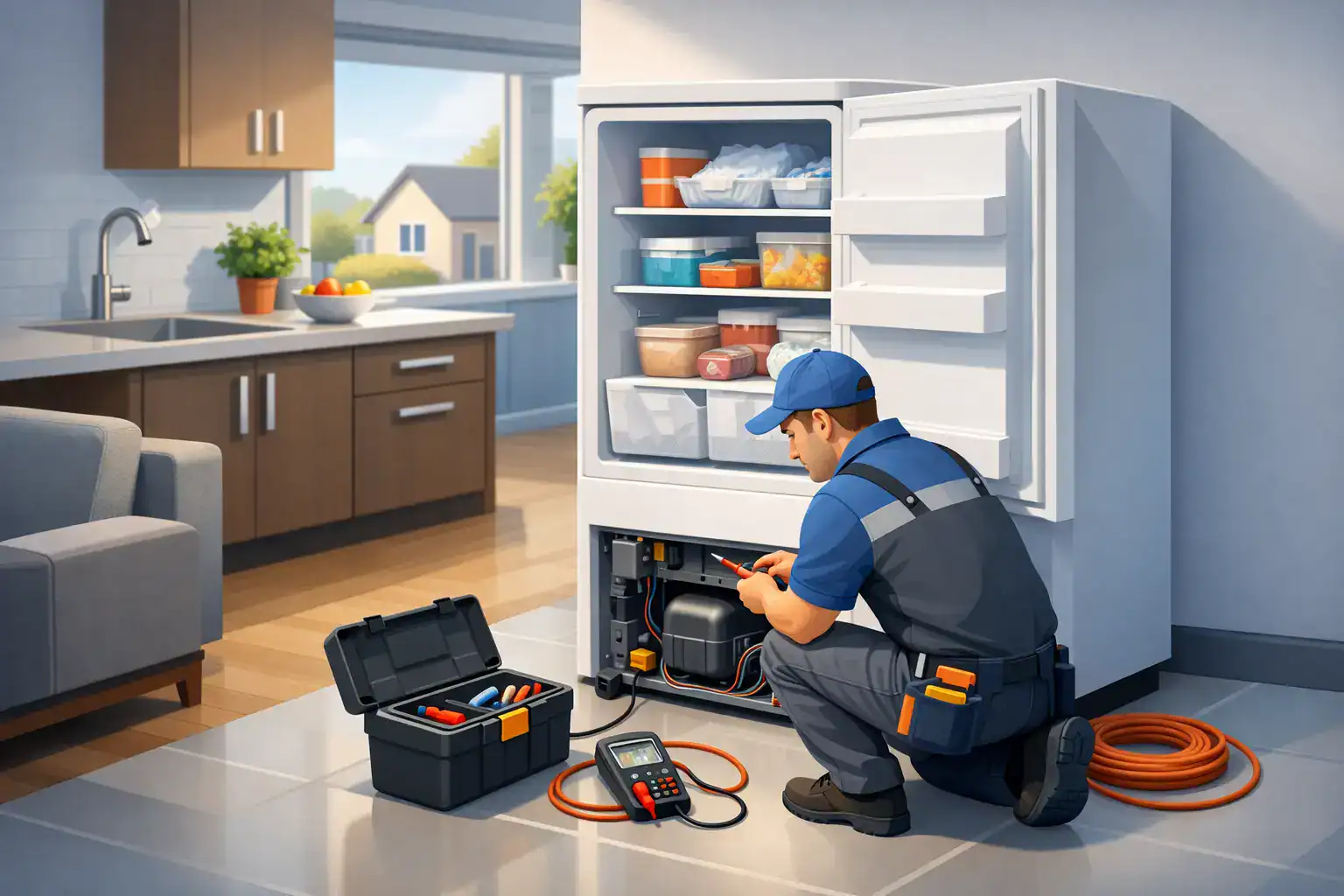
You notice it when a bottle that should be perfectly chilled feels barely cool at all. If your wine cooler not cooling has gone from a small annoyance to a real concern, acting quickly can help protect both the appliance and the wine inside. In many cases, the cause is something simple. In others, it is a sign that a part is starting to fail and needs professional attention before the problem gets worse.
A wine cooler works differently than a standard kitchen refrigerator in a few important ways. It is built to hold a more precise temperature, often in a narrower range, and it is designed around steady storage rather than constant opening, closing, and heavy food loads. That means even a minor issue can affect performance faster than many homeowners expect.
Why a wine cooler not cooling happens
When a wine cooler stops holding the right temperature, the problem usually comes down to airflow, power, controls, or a failing cooling component. Sometimes the unit is running but not cooling enough. Other times it seems completely unresponsive. The exact symptoms matter because they point toward different causes.
If the interior light comes on but the cabinet stays warm, the issue may involve the thermostat, temperature sensor, evaporator fan, or sealed system. If the unit is completely dead, you may be dealing with a power supply problem, a tripped breaker, or a failed control board. If it cools only a little, blocked vents, dirty condenser coils, or a worn door seal are often part of the problem.
Start with the simple checks
Before assuming the worst, it helps to look at the basics. A surprising number of service calls begin with a setting change, restricted airflow, or installation issue that can be corrected quickly.
Check the temperature setting
It sounds obvious, but settings can change accidentally during cleaning, loading bottles, or a power interruption. Make sure the control panel is set to the correct temperature for your storage needs. If your unit has dual zones, confirm both zones are set properly. One section can appear to be failing when only one zone was adjusted.
After changing the setting, give the appliance time to stabilize. A wine cooler does not always recover instantly, especially if the door has been opened repeatedly.
Look at how full the cooler is
Overloading can block interior vents and reduce circulation. On the other hand, a nearly empty unit may cycle differently than expected. Bottles packed too tightly against the back wall or vents can trap cold air in the wrong place and make temperatures uneven from top to bottom.
Try creating a little breathing room between rows, especially near fans and vent openings. Good airflow matters more than most people realize.
Make sure the door closes tightly
If the door seal is loose, cracked, or dirty, cool air can leak out little by little all day long. The unit then runs longer and struggles to keep up. You may notice condensation, frequent cycling, or warm spots inside.
Wipe the gasket clean and check for gaps. If the door has gone out of alignment, even a good gasket may not seal correctly.
Check the room around the unit
Many wine coolers are sensitive to where they are installed. If the appliance is pushed too tightly into cabinetry without proper ventilation, heat cannot escape. If it sits in a garage, sunroom, or other space that gets too hot, cooling performance can drop.
Oklahoma summers are hard on appliances, especially in rooms without steady air conditioning. A wine cooler placed near an oven, in direct sunlight, or against a wall with poor clearance may have trouble maintaining temperature even when its parts are still working.
Common mechanical problems behind poor cooling
If the easy checks do not solve the issue, the problem may be inside the appliance. This is where the symptoms become more useful.
Dirty condenser coils
Condenser coils release heat from the system. When dust, pet hair, and debris build up on them, the appliance cannot get rid of heat efficiently. The result is weak cooling, longer run times, and extra wear on the compressor.
Some homeowners can safely clean accessible coils, but not every wine cooler is designed the same way. Built-in models can be harder to reach, and forcing access panels can create other problems.
Faulty evaporator fan or condenser fan
Fans move air where it needs to go. If an evaporator fan stops working, cold air may not circulate inside the cabinet. If a condenser fan fails, the system can overheat and lose cooling ability.
You might hear unusual noises, or you may notice the compressor running without the interior actually getting cold. Fan failures often start intermittently before becoming constant.
Thermostat or temperature sensor issues
A wine cooler depends on accurate temperature feedback. If the thermostat or sensor is reading incorrectly, the unit may think it is cold enough when it is not. That can lead to short cycling, inconsistent temperatures, or no cooling at all.
This kind of problem is easy to misdiagnose because the appliance may still appear to run normally. It just does not maintain the right conditions.
Compressor or sealed system trouble
If the compressor is weak, failing, or not starting correctly, cooling will drop off fast. In some cases, the unit may click on and off without staying running. In others, it may hum constantly but never reach temperature.
Sealed system issues, including refrigerant leaks, are more serious and require professional diagnosis. These repairs involve specialized tools and should not be handled as a do-it-yourself project.
Control board failure
Modern wine coolers often rely on electronic controls. When a board starts failing, symptoms can be confusing. The display might work while cooling does not. Settings may not respond correctly. The unit may cool one day and stop the next.
Because electronic faults can mimic other problems, proper testing matters. Replacing parts based on guesswork often costs more in the long run.
When to call for wine cooler repair
If your wine cooler is warm for more than a few hours, keeps losing temperature, or shows signs of electrical or mechanical trouble, it is time to schedule service. That includes repeated clicking, buzzing, leaking, burning smells, error codes, or frost buildup where it should not be.
This is especially true if the cooler is built in, holds higher-value bottles, or has dual-zone controls. These appliances can be more specialized than they look from the outside. Quick diagnosis can prevent spoilage, save the appliance, and keep a smaller issue from turning into a major repair.
For homeowners in Edmond, Oklahoma City, and nearby communities, fast local service matters. Waiting too long can put both your wine and the appliance itself at risk, especially during hot weather when the unit is already working harder.
What not to do when a wine cooler stops cooling
A few mistakes can make the problem worse. Avoid turning the temperature to the coldest setting and opening the door repeatedly to check progress. That only increases strain and makes it harder to tell what is actually happening.
It is also wise not to keep resetting breakers or unplugging and restarting the unit over and over. If an electrical component is failing, repeated resets can cause more damage. And while online advice can be helpful for basic checks, replacing electrical parts without proper testing is rarely worth the risk.
Can a wine cooler be worth repairing?
Usually, yes – but it depends on the age of the appliance, the brand, the type of failure, and the value of the unit. A relatively new cooler with a fan motor, thermostat, or seal problem is often a strong repair candidate. A very old model with sealed system failure may be harder to justify.
That said, many homeowners are surprised to learn that repair makes more sense than replacement. Built-in wine coolers and higher-end models can be expensive to swap out, and matching cabinetry dimensions is not always simple. An honest diagnosis helps you decide based on real numbers rather than guesswork.
A little maintenance goes a long way
Once the cooler is back to normal, a few good habits can help prevent the same issue from coming back. Keep vents clear, clean accessible dust buildup, avoid overpacking bottles, and pay attention to changes in sound or temperature. If the appliance is installed in a tight space, make sure it still has the ventilation clearance the manufacturer recommends.
Routine care will not prevent every failure, but it does reduce strain on the system. And when a unit starts showing early signs of trouble, getting it checked sooner usually leads to a simpler repair.
At Don Fuller’s Appliance Repair, we know homeowners want straight answers, fair pricing, and service that respects their time. If your wine cooler is not cooling the way it should, the best next step is to treat it early, before a small temperature problem turns into a bigger interruption at home.