




















Knowing how to defrost a freezer is pretty much a required skill for homeowners, which is why Don Fuller’s Appliance Repair is here to share some proper maintenance routines with helpful tips for defrosting. Frost buildup is a common issue we see in freezers, so take a few minutes to learn the best way to deal with it by reading our quick guide!
Why Defrost Your Freezer?

As frost builds up in freezers, it starts hogging space, restricting airflow, and making your appliance less energy efficient. That means higher electricity bills, more wear on your freezer, and less room for frozen foods. When you defrost your freezer, you get rid of all that ice build-up and help keep your freezer temperature consistent. It will then function better, leaving more usable space in your freezer compartment.
Why Does Your Freezer Frost Up in the First Place?
It all comes down to warm air circulating inside of a freezer after outside air sneaks in. This happens because every time you have your freezer door open, a bit of moisture tags along with the air that goes in. Do that enough times and you’ll end up with frost build-up.
You’ll also see more frost if your door seal isn’t tight, if you’ve overloaded the freezer and blocked air circulation, or if you’re putting hot food inside without letting it cool down first. All of these create conditions where ice starts piling up.
How Often Should You Do Freezer Defrosting?

Are you wondering, “How often should I defrost my freezer?” Generally, the amount of time it takes to defrost a freezer depends on what kind of freezer you have and how much ice is building up.
- If you have a manual defrost freezer, you’ll want to defrost it once or twice a year, or whenever the ice thickness goes beyond a quarter inch.
- For frost-free freezers, you might not need to defrost at all, but it’s worth giving it a deep clean every so often to keep it working great.
- Semi-automatic models fall somewhere in between and might need a little attention every few months.
The Proper Freezer Defrosting Process for Different Freezer Types
1. Manual Defrost Freezers
These are usually found in chest and upright freezers. While they usually need the most attention, they’re also the most straightforward.
- Always start by turning off the power and unplugging it.
- Remove the frozen foods inside and move them into a cooler or another freezer if possible.
- Prepare some old beach towels or something similar in case you have to deal with spills on the floor.
- Let the ice melt. It can take about two hours for the ice to melt naturally in room-temperature air. (If you’re in a rush, we’ll talk about quick ways to defrost below.)
- Wipe and dry with a soft cloth. Once the ice is gone, clean the inside with warm water and a bit of baking soda.
- Once it’s dry, plug it in, turn it back on, and restock.
2. Frost-Free (Auto-Defrost) Freezers
Most modern fridge freezers and even portable freezers have automatic frost-free defrost systems, so they don’t usually get ice buildup like older units do. That said, sometimes moisture can sneak in and cause small patches of frost, especially in the back corners or around the door.
You won’t need to fully defrost your freezer often, but we recommend cleaning it out every few months. You can do this during regular fridge cleaning or when you notice the freezer not cooling evenly.
3. Semi-Automatic Defrost Freezers
These types will have a defrost button or switch. Press it, and the freezer will stop cooling long enough to start the melting process. You’ll still need to mop up the water afterward, but it’s faster than the manual route. Just be ready with towels or a tray underneath because most of these don’t have a drainage hose or system.
How Can You Defrost a Freezer Quickly?
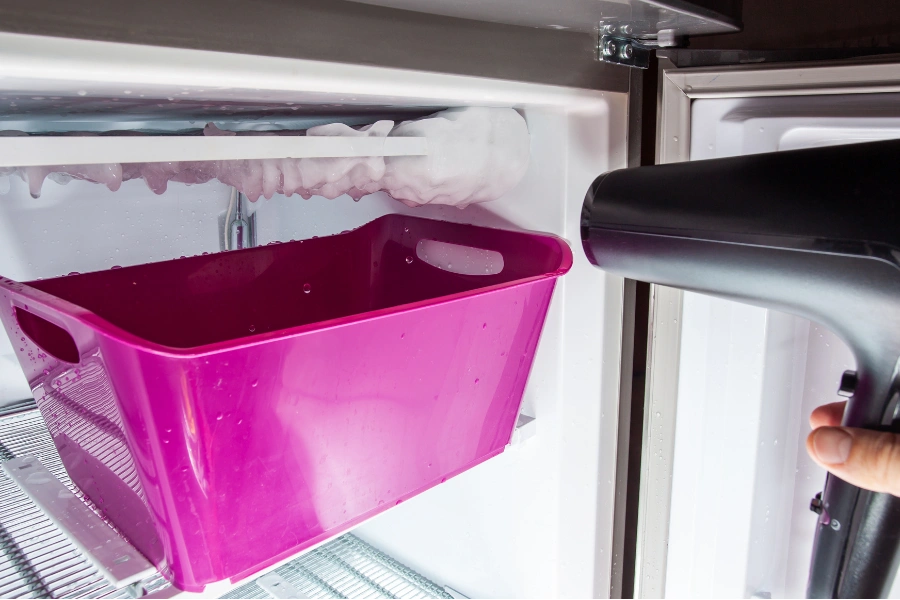
Don’t want to wait hours for the ice to melt? These are a few tricks that can speed things up safely:
- Use bowls of hot water. Set them on the shelves and shut the door. The steam will loosen the frost much faster.
- Aim a fan at the open freezer. Circulating warm air does wonders.
- You can also use a hair dryer on a low setting to target stubborn ice patches. Just don’t get water near the cord, and stay away from plastic parts.
- Use a warm cloth and press it against frosty spots to soften the buildup.
What not to do: Don’t scrape ice with a knife or anything sharp. You could risk puncturing a wall or damaging the coils, which could ruin your freezer.
How Long Does it Take to Unfreeze a Freezer?

If you defrost a freezer naturally and let the ice melt on its own, you’re looking at 4-6 hours for a medium-size freezer with heavy frost buildup. But using hot water or doing the fan method can cut that time down to 1-2 hours.
How Do You Get Rid of Ice Buildup in Freezers Without Defrosting?
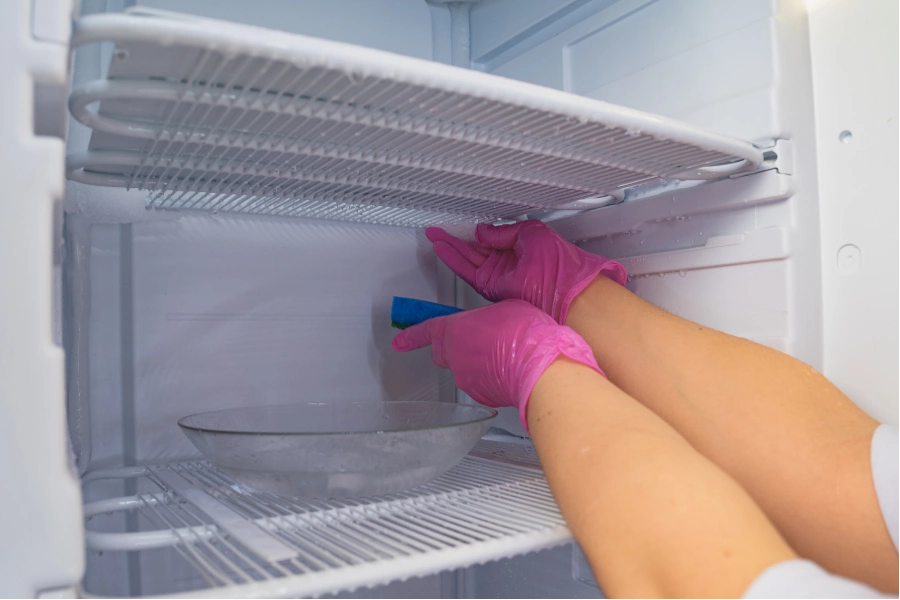
If you just want a quick fix and don’t want to unplug everything:
- Use a plastic spatula to gently remove visible frost.
- Press a warm, damp towel against icy spots until they soften.
- Use a hair dryer (on low heat) and wait for the ice to melt.
Keep in mind, this is only a temporary fix. If frost buildup keeps coming back or it’s getting worse each week, you’ll need to fully defrost sooner or later. And if frost keeps returning right after you defrost, there’s probably an issue with the door seal or internal components.
How Do You Maintain a Freezer to Prevent Frost Buildup?
There are some simple things you can do to prevent that icy buildup from happening (or at least keep it to a minimum). Some of them are:
1. Keep the Seal Tight and Clean
The rubber gasket around your freezer door keeps warm air out and cold air in. If it’s grimy, damaged, or loose, warm air slips in, moisture forms, and frost eventually follows. Every now and then, wipe the gasket with warm water and mild dish soap. If it looks cracked or the door isn’t sealing all the way, it might be time to replace it.
2. Set the Freezer Temperature Correctly
Your freezer temperature dial can be part of the problem if it’s not set right. Too cold and you’ll risk overworking the freezer, which can trigger more frequent frost cycles. Too warm and the food won’t freeze properly. Plus, it will make the appliance kick on and off more often than it should.
Most freezers do best set to around 0°F. If your model uses numbers instead of temperatures, aim for the middle settling unless the manual says otherwise.
3. Cool Food Before Storing It
Putting hot or even warm food directly into the freezer also invites moisture. That heat quickly raises the humidity level, and that moisture turns into frost. The top tip to help prevent this is to simply let food cool to room temperature before freezing it.
Also, keep food frozen by storing it in an airtight container or tightly sealed bags so less moisture escapes into the air.
4. Keep It Full But Not Packed
A freezer works more efficiently when there’s a steady load inside, and this helps maintain a consistent temperature. However, overstuffing it can block the airflow, and under-filling it can lead to the temperature regulation getting spotty. Try to keep it about 75% full.
5. Store Food and an Ice Tray Smartly
Stacking food and an ice tray too close to the walls can lead to frost forming where there’s not enough airflow. Give everything a little breathing room. If air can’t move around, cold spots form and lead to frost. Keep items slightly pulled away from the back wall and the air vents.
6. Level the Freezer Properly
An uneven freezer can actually mess with the door seal. If your unit leans even a little, the door may not close as tightly as it should. Stick some shims underneath the front legs if the floor’s uneven. You want the front slightly higher than the back so the door naturally swings shut.
7. Wipe the Inside Regularly
You don’t need to wait for a full defrost to clean your freezer. Hand-wiping the inside every few weeks with a warm, damp cloth helps catch early frost buildup before it gets out of control.
8. Check the Drain (If Your Freezer Has One)
Some upright and frost-free freezers have a small drain hole at the bottom where condensation collects. If that drain gets blocked, water can back up, freeze, and lead to frost buildup. If you notice water isn’t pouring from a drain after a defrost cycle, check and make sure the line isn’t clogged.
9. Block Heat from Outside Sources
Ever grabbed food from a freezer and wondered why it wasn’t properly frozen? It could have something to do with heat from outside sources. Keep your freezer away from heat sources like direct sunlight, stoves, or dishwashers. It helps to prevent radiant heat from warming up the outer shell and messing with the internal cooling. The more stable the outside conditions, the better your freezer can maintain the cold.
Freezer Not Freezing? Call Don Fuller’s Appliance Repair!
Defrosting a freezer is something most homeowners can handle with no issue. But if your freezer just isn’t cooperating, or if you’re dealing with something more complicated than a little frost, it’s worth bringing in a freezer technician from Don Fuller’s Appliance Repair.
So, if your freezer’s on the fritz or you just need someone to take a look, give us a call or book an appointment online!