(405) 622-5961

Washer Repair Edmond: When to Call a Pro

star ratings don fuller appliance repair
"
Prompt, professional and very knowledgeable. Don's a great guy, top notch. Definitely recommend!
The repairman showed up on time, fixed the problem quickly, and then charged a reasonable price for the repair. This is what I look for in a repair company!
Technician was on time and knowledgeable. He worked efficiently and now my oven is working. Just in time for Christmas!
I highly recommend Don for any appliance repairs! He is honest & always arrives when he says he will!
Easy to make appt. Very responsive and gives good advice regarding repairs. Our “go to” now.
So far so good. No refrigerator leaks detected. Ice maker appears to be working properly. The technician is very knowledgeable and recommended.
Don researched the issue, located necessary parts, and made the repairs on a timely basis.
Very persistent in finding the issues. Treated very fairly. They are the best!
Great service……Quickly diagnosed the problem and completed the needed repairs.
"

A washer that stops mid-cycle can turn a normal Tuesday into a pile of wet clothes, missed routines, and a lot of frustration. For dependable washer repair Edmond homeowners can count on, it helps to know what the symptoms mean, what you can safely check first, and when a trained technician is the better call.

Washers work hard in Oklahoma homes. Between family laundry, work clothes, towels, bedding, and frequent loads during busy weeks, even a well-made machine can develop problems over time. The good news is that many common washer issues can be repaired without replacing the entire appliance.

Washer Repair in Edmond: Signs You Should Not Ignore

Some washer problems are obvious, such as a machine that will not start. Others begin quietly and get worse over several loads. Catching the problem early may help prevent water damage, avoid a more extensive repair, and get your laundry routine back on track sooner.

Watch for these common warning signs:

  • The washer will not power on, start a cycle, or unlock when the cycle ends.
  • Water stays in the tub after a load, or the washer drains very slowly.
  • The machine shakes, bangs, walks across the floor, or makes grinding noises during spin.
  • Clothes come out soaking wet, even after a full spin cycle.
  • You see water on the floor, notice a musty odor, or find detergent residue left in the dispenser.

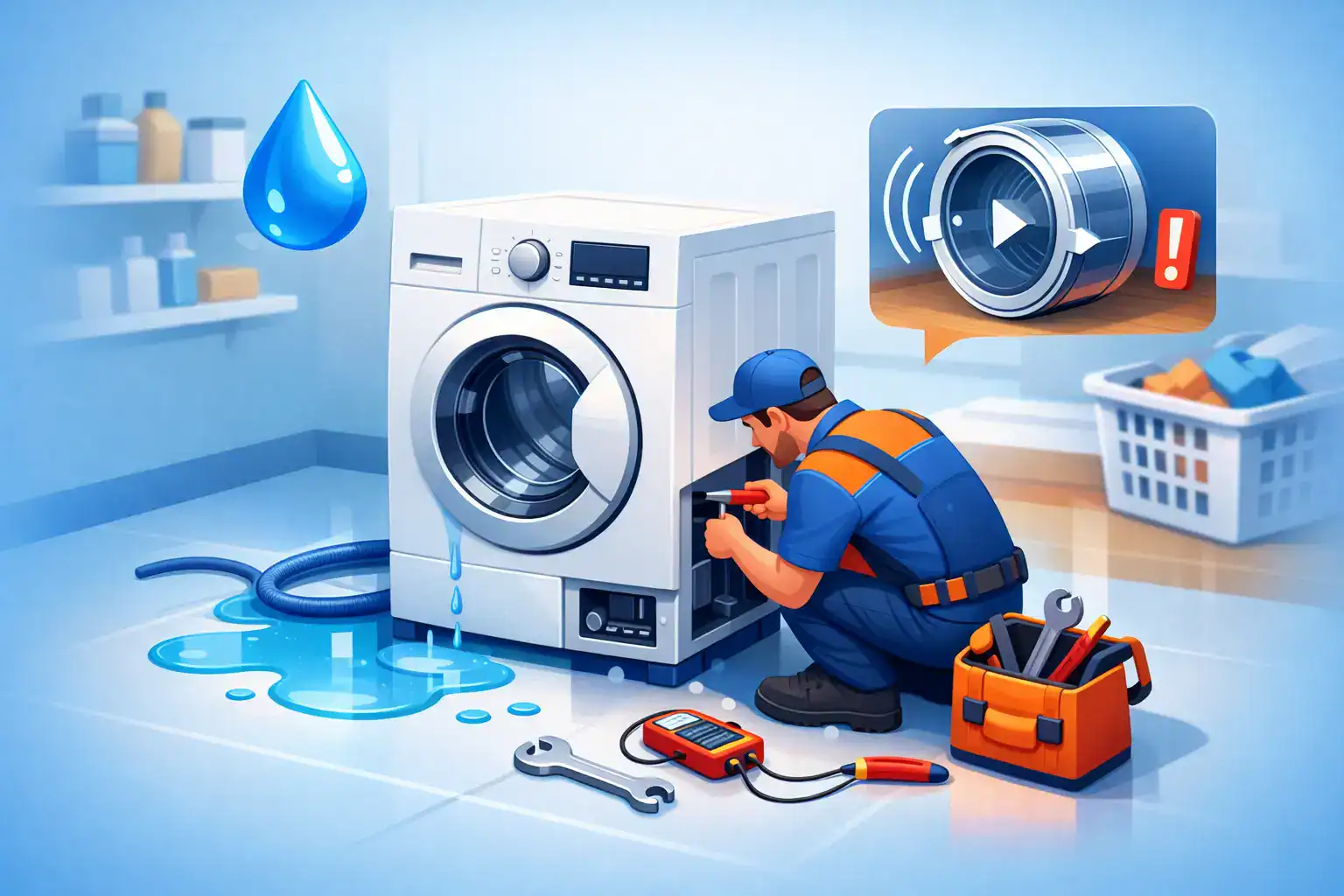
A washer that is leaking deserves prompt attention. A small puddle can come from a loose hose or an overloaded load, but it can also point to a worn door seal, a cracked internal hose, a failing water inlet valve, or a drainage issue. Continuing to run the machine could damage flooring, walls, or nearby cabinets.

Unusual noises are another reason to schedule service. A few normal operating sounds are expected, especially during draining and spinning. Loud knocking, metal-on-metal sounds, repeated squealing, or a harsh grinding noise are not normal. Those symptoms can involve suspension components, a drive belt, a motor, a pump, or bearings that need professional diagnosis.

Safe Checks Before You Schedule Washer Repair

Before assuming the washer needs a major repair, take a few simple steps. Start by checking that the appliance is plugged in and that the breaker has not tripped. If your washer has a digital display, write down any error code before turning the power off. That code can give a technician useful information about where the problem began.

If the washer will not fill, confirm that both water supply valves behind the machine are fully open. Look at the supply hoses for kinks or obvious leaks. If the washer will not drain, check whether the drain hose is pinched or pushed too far into the standpipe. A hose installation issue can interfere with normal draining.

For a washer that is shaking heavily, pause the cycle if possible and redistribute the load. One heavy blanket, a bath mat, or several items bunched to one side can make a machine unbalanced. Also check whether the washer is sitting level on the floor. If it continues to shake after a balanced load and proper leveling, the problem may be inside the machine.

Do not remove panels, bypass a door lock, or attempt electrical repairs yourself. Washers combine water, moving parts, and electricity, which makes a guesswork repair risky. Turn off the water supply if there is an active leak, unplug the washer if it is safe to do so, and arrange for service.

What a Professional Washer Diagnosis Can Find

A dependable repair starts with finding the actual cause rather than replacing parts based on a symptom alone. For example, a washer that will not spin may have a worn belt, but it could also have a failed lid switch, motor issue, control-board problem, drain restriction, or worn suspension parts. The same symptom can have several possible causes.

A technician can inspect the washer’s hoses, pump, drain system, door or lid lock, drive components, electrical connections, sensors, and controls. This process matters because it helps avoid paying for a part that does not solve the problem.

Front-load and top-load washers can fail in different ways. Front-load models may develop issues with door boots, drain pumps, or mold buildup around the seal. Top-load machines may show problems with agitators, suspension rods, or lid switches. High-efficiency machines also rely on sensors and electronic controls that need careful testing when a cycle is not operating as expected.

At Don Fuller’s Appliance Repair, experienced technicians help Edmond homeowners understand the issue in straightforward terms before repair work moves forward. That means you can make a decision with a clearer picture of the problem, the recommended repair, and what it means for your household.

When Repair Makes More Sense Than Replacement

Replacing a washer can be expensive, especially when the problem is limited to one repairable component. In many cases, repairing the appliance is a practical choice when the machine is otherwise in good condition, has performed reliably, and does not have repeated major failures.

The decision depends on the washer’s age, brand, overall condition, repair needs, and the cost of a comparable replacement. A newer washer with a failed drain pump, water valve, door lock, or belt is often worth repairing. On the other hand, an older machine with multiple failing components, severe corrosion, or costly transmission or bearing damage may be closer to the point where replacement is more practical.

There is no one answer for every household. A family that depends on daily laundry may value a repair that restores service quickly. A homeowner planning a remodel or appliance upgrade may decide differently. Honest diagnosis and transparent pricing give you the information needed to choose what fits your situation.

Common Washer Problems and Their Likely Causes

A washer that does not drain is frequently connected to a clogged or failing drain pump, a blockage in the drain path, or a damaged drain hose. Small items such as coins, socks, hair ties, and fabric pieces can sometimes make their way into areas where they interfere with draining.

If the washer fills but does not agitate or spin, the cause may involve a worn belt, motor coupling, lid switch, drive motor, or control system. If it stops at the same point in every cycle, an electronic control or sensor may need testing.

A machine that leaves clothes dirty or covered in residue may not be getting enough water, may have a dispenser problem, or may simply be dealing with too much detergent. High-efficiency washers require low-sudsing detergent, and using more than recommended does not make clothes cleaner. It can leave buildup in the washer and make rinsing less effective.

Bad odors are also common, particularly in front-load washers. Leaving the door closed after use, using excess detergent, and running frequent cold-water cycles can allow moisture and residue to build up. Cleaning the door seal, using the washer’s cleaning cycle as directed, and leaving the door slightly open between loads can help. If the odor persists alongside drainage or performance issues, service may be needed.

How to Help Your Washer Last Longer

A few regular habits can reduce strain on your washer. Avoid consistently overloading the drum, and separate very heavy items when possible. Check pockets before loading clothes, since coins and small objects can damage the pump or drum. Use the detergent amount recommended for your machine and water conditions.

It also helps to inspect the water hoses occasionally for bulges, cracks, or dampness around the connections. Clean the washer according to the manufacturer’s instructions, including the detergent dispenser and door gasket on front-load models. These simple steps will not prevent every repair, but they can reduce avoidable wear.

When your washer is leaking, refusing to spin, or leaving you with a tub full of water, waiting rarely makes the situation easier. A prompt, professional diagnosis can protect your home, preserve your appliance when repair is worthwhile, and help your household get back to clean laundry without unnecessary delay.

Washer Repair Edmond: When to Call a Pro

star ratings don fuller appliance repair
"
Prompt, professional and very knowledgeable. Don's a great guy, top notch. Definitely recommend!
So far so good. No refrigerator leaks detected. Ice maker appears to be working properly. The technician is very knowledgeable and recommended.
Don researched the issue, located necessary parts, and made the repairs on a timely basis.
Easy to make appt. Very responsive and gives good advice regarding repairs. Our “go to” now.
Technician was on time and knowledgeable. He worked efficiently and now my oven is working. Just in time for Christmas!
The repairman showed up on time, fixed the problem quickly, and then charged a reasonable price for the repair. This is what I look for in a repair company!
Great service……Quickly diagnosed the problem and completed the needed repairs.
Very persistent in finding the issues. Treated very fairly. They are the best!
I highly recommend Don for any appliance repairs! He is honest & always arrives when he says he will!
"

A washer that stops mid-cycle can turn a normal Tuesday into a pile of wet clothes, missed routines, and a lot of frustration. For dependable washer repair Edmond homeowners can count on, it helps to know what the symptoms mean, what you can safely check first, and when a trained technician is the better call.

Washers work hard in Oklahoma homes. Between family laundry, work clothes, towels, bedding, and frequent loads during busy weeks, even a well-made machine can develop problems over time. The good news is that many common washer issues can be repaired without replacing the entire appliance.

Washer Repair in Edmond: Signs You Should Not Ignore

Some washer problems are obvious, such as a machine that will not start. Others begin quietly and get worse over several loads. Catching the problem early may help prevent water damage, avoid a more extensive repair, and get your laundry routine back on track sooner.

Watch for these common warning signs:

  • The washer will not power on, start a cycle, or unlock when the cycle ends.
  • Water stays in the tub after a load, or the washer drains very slowly.
  • The machine shakes, bangs, walks across the floor, or makes grinding noises during spin.
  • Clothes come out soaking wet, even after a full spin cycle.
  • You see water on the floor, notice a musty odor, or find detergent residue left in the dispenser.

A washer that is leaking deserves prompt attention. A small puddle can come from a loose hose or an overloaded load, but it can also point to a worn door seal, a cracked internal hose, a failing water inlet valve, or a drainage issue. Continuing to run the machine could damage flooring, walls, or nearby cabinets.

Unusual noises are another reason to schedule service. A few normal operating sounds are expected, especially during draining and spinning. Loud knocking, metal-on-metal sounds, repeated squealing, or a harsh grinding noise are not normal. Those symptoms can involve suspension components, a drive belt, a motor, a pump, or bearings that need professional diagnosis.

Safe Checks Before You Schedule Washer Repair

Before assuming the washer needs a major repair, take a few simple steps. Start by checking that the appliance is plugged in and that the breaker has not tripped. If your washer has a digital display, write down any error code before turning the power off. That code can give a technician useful information about where the problem began.

If the washer will not fill, confirm that both water supply valves behind the machine are fully open. Look at the supply hoses for kinks or obvious leaks. If the washer will not drain, check whether the drain hose is pinched or pushed too far into the standpipe. A hose installation issue can interfere with normal draining.

For a washer that is shaking heavily, pause the cycle if possible and redistribute the load. One heavy blanket, a bath mat, or several items bunched to one side can make a machine unbalanced. Also check whether the washer is sitting level on the floor. If it continues to shake after a balanced load and proper leveling, the problem may be inside the machine.

Do not remove panels, bypass a door lock, or attempt electrical repairs yourself. Washers combine water, moving parts, and electricity, which makes a guesswork repair risky. Turn off the water supply if there is an active leak, unplug the washer if it is safe to do so, and arrange for service.

What a Professional Washer Diagnosis Can Find

A dependable repair starts with finding the actual cause rather than replacing parts based on a symptom alone. For example, a washer that will not spin may have a worn belt, but it could also have a failed lid switch, motor issue, control-board problem, drain restriction, or worn suspension parts. The same symptom can have several possible causes.

A technician can inspect the washer’s hoses, pump, drain system, door or lid lock, drive components, electrical connections, sensors, and controls. This process matters because it helps avoid paying for a part that does not solve the problem.

Front-load and top-load washers can fail in different ways. Front-load models may develop issues with door boots, drain pumps, or mold buildup around the seal. Top-load machines may show problems with agitators, suspension rods, or lid switches. High-efficiency machines also rely on sensors and electronic controls that need careful testing when a cycle is not operating as expected.

At Don Fuller’s Appliance Repair, experienced technicians help Edmond homeowners understand the issue in straightforward terms before repair work moves forward. That means you can make a decision with a clearer picture of the problem, the recommended repair, and what it means for your household.

When Repair Makes More Sense Than Replacement

Replacing a washer can be expensive, especially when the problem is limited to one repairable component. In many cases, repairing the appliance is a practical choice when the machine is otherwise in good condition, has performed reliably, and does not have repeated major failures.

The decision depends on the washer’s age, brand, overall condition, repair needs, and the cost of a comparable replacement. A newer washer with a failed drain pump, water valve, door lock, or belt is often worth repairing. On the other hand, an older machine with multiple failing components, severe corrosion, or costly transmission or bearing damage may be closer to the point where replacement is more practical.

There is no one answer for every household. A family that depends on daily laundry may value a repair that restores service quickly. A homeowner planning a remodel or appliance upgrade may decide differently. Honest diagnosis and transparent pricing give you the information needed to choose what fits your situation.

Common Washer Problems and Their Likely Causes

A washer that does not drain is frequently connected to a clogged or failing drain pump, a blockage in the drain path, or a damaged drain hose. Small items such as coins, socks, hair ties, and fabric pieces can sometimes make their way into areas where they interfere with draining.

If the washer fills but does not agitate or spin, the cause may involve a worn belt, motor coupling, lid switch, drive motor, or control system. If it stops at the same point in every cycle, an electronic control or sensor may need testing.

A machine that leaves clothes dirty or covered in residue may not be getting enough water, may have a dispenser problem, or may simply be dealing with too much detergent. High-efficiency washers require low-sudsing detergent, and using more than recommended does not make clothes cleaner. It can leave buildup in the washer and make rinsing less effective.

Bad odors are also common, particularly in front-load washers. Leaving the door closed after use, using excess detergent, and running frequent cold-water cycles can allow moisture and residue to build up. Cleaning the door seal, using the washer’s cleaning cycle as directed, and leaving the door slightly open between loads can help. If the odor persists alongside drainage or performance issues, service may be needed.

How to Help Your Washer Last Longer

A few regular habits can reduce strain on your washer. Avoid consistently overloading the drum, and separate very heavy items when possible. Check pockets before loading clothes, since coins and small objects can damage the pump or drum. Use the detergent amount recommended for your machine and water conditions.

It also helps to inspect the water hoses occasionally for bulges, cracks, or dampness around the connections. Clean the washer according to the manufacturer’s instructions, including the detergent dispenser and door gasket on front-load models. These simple steps will not prevent every repair, but they can reduce avoidable wear.

When your washer is leaking, refusing to spin, or leaving you with a tub full of water, waiting rarely makes the situation easier. A prompt, professional diagnosis can protect your home, preserve your appliance when repair is worthwhile, and help your household get back to clean laundry without unnecessary delay.