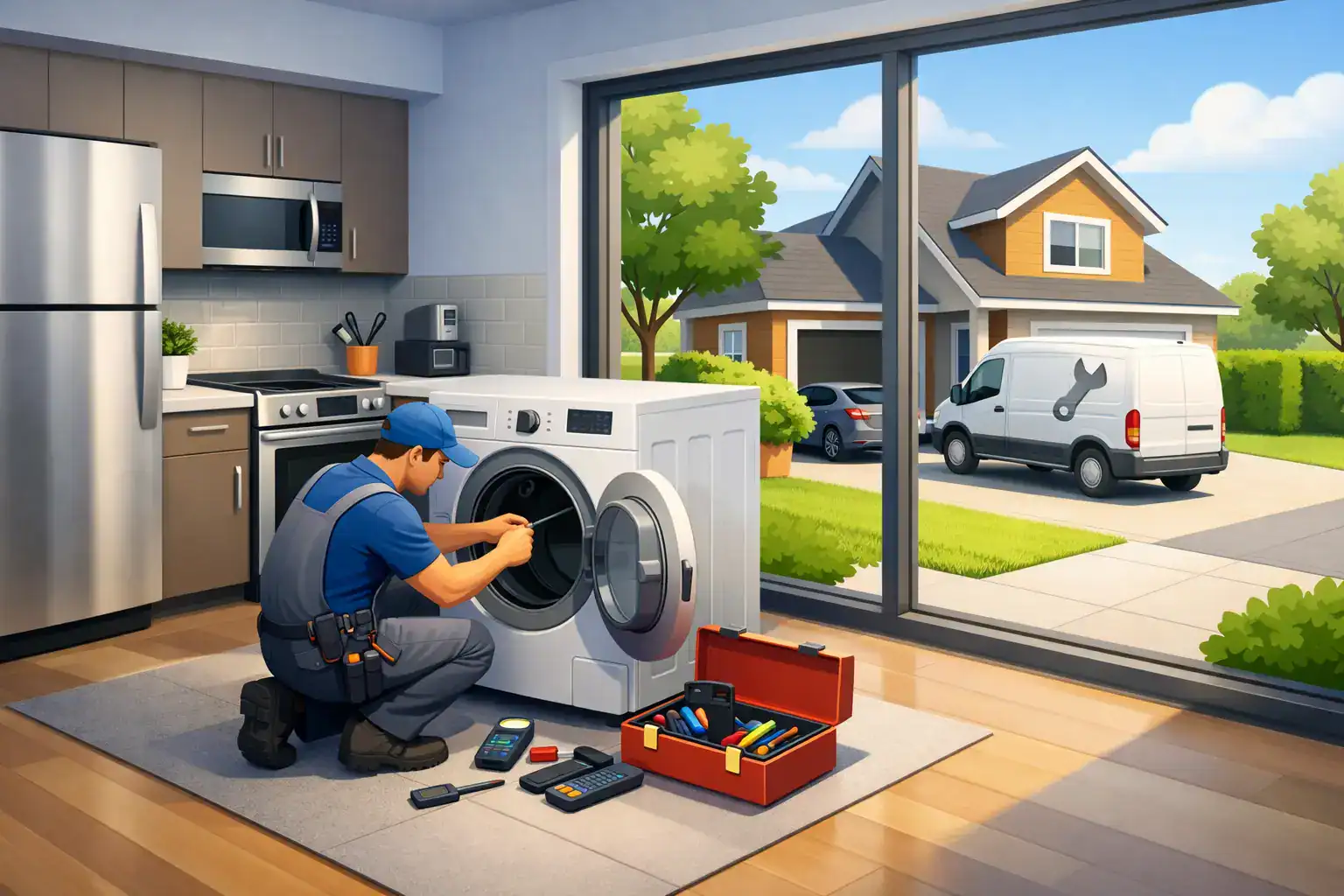
A dryer that feels unusually hot, leaves clothes scorching, or fills the laundry room with a burning smell needs attention before the next load. If you are asking, “why is my dryer overheating,” the most common answer is restricted airflow – but a failed internal part can also be responsible. Continuing to run an overheating dryer can damage clothing, shorten the appliance’s life, and create a real fire risk.
The good news is that some causes are simple to check. Others require a trained technician who can safely test electrical components, gas connections, and the dryer’s heating system. Here is how to tell the difference and what to do next.
Why Is My Dryer Overheating? Start With Airflow
A dryer creates heat, but it must also move hot, moist air outside. When that air cannot escape, heat builds inside the drum, cabinet, and vent system. The dryer may take longer to dry clothes, feel hot on the outside, or shut down during a cycle.
Start with the lint screen. Remove lint after every load, then wash the screen occasionally with warm water and mild dish soap. Dryer sheets can leave an invisible film that restricts air even when the screen looks clean. Let it dry completely before reinstalling it.
Next, look at the outdoor vent hood while the dryer is running. You should feel a steady, warm flow of air. Weak airflow, no airflow, or a flap that barely opens can point to lint buildup, a crushed vent hose, a disconnected duct, or a blocked exterior hood. Bird nests, leaves, and Oklahoma windblown debris can also block an outside vent.
Do not assume a clean lint screen means the vent is clear. Lint can collect throughout the duct, especially in long runs with multiple turns. Flexible plastic or foil-style venting is more likely to sag, trap lint, and overheat than properly installed rigid or semi-rigid metal ducting.
A blocked vent can make a dryer work too hard
When airflow is restricted, moisture stays in the drum longer. The dryer keeps heating because clothes are still damp, while the trapped heat pushes the appliance beyond its normal operating range. Some dryers will trip a safety device and stop heating. Others may continue running but produce excessive heat.
If the dryer is hot and drying poorly, stop using it until the venting is checked. Cleaning a vent is not just a maintenance task. It is one of the most effective ways to prevent overheating and reduce drying times.
Heating Parts That Can Cause Excessive Dryer Heat
If airflow is clear and the dryer still gets too hot, the problem may be inside the appliance. Dryers use several safety and temperature-control components. A failure in one of them can cause the heating element or gas burner to stay on too long.
On an electric dryer, a heating element can sometimes warp or break in a way that allows it to contact the metal housing. When this happens, the element may receive power even when the dryer’s controls are trying to cycle it off. The result can be constant or excessive heat.
A faulty cycling thermostat is another common cause. This part monitors dryer temperature and tells the heat source when to turn on and off. If it cannot read the temperature correctly or fails in the closed position, the dryer may overheat. A high-limit thermostat and thermal cutoff are backup safety parts designed to interrupt heat when temperatures become unsafe. If either has failed, it often signals that an airflow issue or another underlying problem must be addressed as well.
Gas dryers have their own set of potential concerns, including a faulty gas valve coil, flame sensor, igniter, or burner assembly. Gas appliance repairs should not be a do-it-yourself project. Incorrect testing or installation can create a gas leak, combustion problem, or fire hazard.
The sensor may be giving the dryer bad information
Many newer dryers use thermistors, moisture sensors, or electronic control boards to manage heat and cycle time. If a sensor is coated with residue, damaged, or disconnected, the dryer may not respond properly to temperature conditions. A control board failure is less common than a vent blockage, but it can cause erratic heating behavior.
A technician can test these components with the correct meter readings and check the dryer’s wiring for heat damage. Replacing parts without diagnosis can be expensive and may not solve the actual problem.
Warning Signs You Should Not Ignore
Not every warm dryer is overheating. The cabinet and laundry room can feel warm during a normal high-heat cycle, particularly in a small utility room. What matters is whether the heat is excessive, persistent, or accompanied by other changes in performance.
Stop using the dryer and arrange service if you notice a burning odor, smoke, sparks, melted items, a hot electrical plug, or a breaker that trips. Turn the dryer off and unplug an electric model if it is safe to do so. For a gas dryer, turn the appliance off and avoid touching gas connections. If you smell gas, leave the area and contact your gas utility or emergency services according to their instructions.
You should also take overheating seriously when clothes are hotter than usual, loads need multiple cycles, the dryer shuts off before clothes are dry, or the top and sides become too hot to comfortably touch. These symptoms may seem inconvenient at first, but they are often early warnings that the dryer is not venting or regulating heat correctly.
Safe Checks Homeowners Can Make
Before scheduling a repair, there are a few practical checks that do not require taking the dryer apart. First, clean the lint screen and verify that it is fully seated. Then inspect the visible section of the vent hose behind the dryer. It should not be crushed, sharply bent, or packed with lint.
Move laundry products away from the dryer, especially anything flammable. Check that the dryer has space around it and that the laundry room is not unusually humid or hot. If the dryer is installed in a garage or closet, poor room ventilation can add to the problem, though it is rarely the only cause.
Run one short test load only after confirming clear outdoor airflow. If the dryer rapidly becomes too hot, produces a burning smell, or does not vent properly outside, stop the cycle. Do not keep testing it in hopes that the problem will clear on its own.
Avoid removing the rear panel or bypassing a thermal fuse. Those safety parts are there for a reason. Appliance repairs can involve 240-volt electricity, sharp metal edges, moving drum components, and, in gas models, fuel connections.
When to Call for Dryer Repair
A professional inspection is the right next step when the vent appears clear but the dryer remains too hot, when a safety device has tripped, or when you see signs of damaged wiring or a failed heating component. It is also worthwhile if the vent run is difficult to reach, unusually long, or routed through walls, an attic, or a crawl space.
For homeowners in Edmond, Oklahoma City, and nearby communities, Don Fuller’s Appliance Repair can diagnose dryer overheating concerns and explain the repair in straightforward terms before work begins. An experienced technician can identify whether the issue is vent-related, electrical, mechanical, or connected to the dryer’s temperature controls – and help avoid replacing an appliance when a dependable repair is the better value.
A dryer should make laundry easier, not leave you wondering whether it is safe to run another load. Give an overheating appliance a break, clear the basic airflow issues you can safely reach, and have persistent heat problems checked promptly so your home and routine can get back to normal.