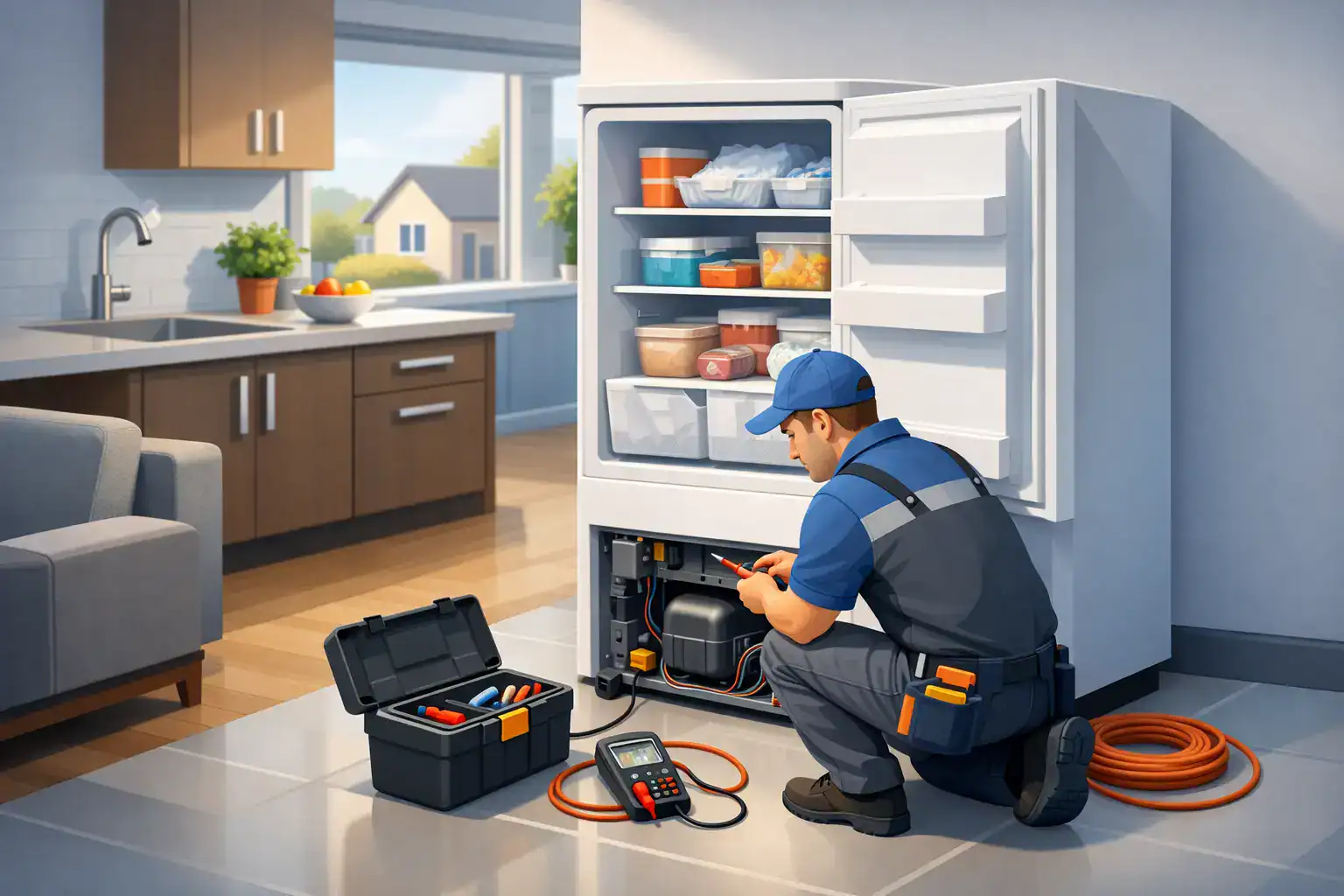
That warm carton of milk at breakfast is usually the first sign something is off. When your refrigerator starts slipping even a few degrees, you do not have much time. Refrigerator repair before food spoils is not just about convenience. It protects your groceries, helps you avoid a bigger appliance failure, and gets your kitchen back to normal faster.
For most households, a refrigerator problem becomes urgent the moment the temperature starts climbing. Fresh meat, dairy, leftovers, and produce can go bad quickly, especially in Oklahoma heat or during a busy week when the door gets opened often. The good news is that not every refrigerator issue means the whole unit has failed. Some problems are minor. Others need a trained technician right away. Knowing the difference can save both time and money.
Why quick refrigerator repair before food spoils matters
A refrigerator does not have to stop running completely to be in trouble. In many homes, the lights are on, the fan is humming, and the appliance sounds normal, but the food compartment is not staying cold enough. That is where people lose time. If the freezer still seems cold, it is easy to assume the problem can wait until tomorrow. Sometimes it can. Often it should not.
Food safety is the biggest reason to act quickly. Refrigerated food should stay at 40 degrees Fahrenheit or below. Once temperatures rise above that range for too long, bacteria growth becomes a concern. Beyond food loss, a struggling refrigerator also works harder than it should. That can put extra strain on the compressor, fans, and control components, turning a repairable issue into a more expensive one.
Fast action also gives you more options. A clogged condenser coil, failing evaporator fan, bad thermostat, damaged door seal, or defrost problem can often be repaired. Waiting too long can mean spoiled food, water leaks, frost buildup, or full system failure.
Early signs your refrigerator needs attention
Most refrigerators give some warning before they quit cooling properly. The signs are not always dramatic. In fact, the earliest clues are usually easy to dismiss until the problem gets worse.
If milk spoils faster than usual, drinks are not as cold, or leftovers feel cool instead of cold, pay attention. Another common sign is condensation inside the fresh food section or around the door gasket. You may also notice frost where it should not be, unusual clicking, longer run times, or a freezer that seems fine while the refrigerator compartment warms up.
A puddle under the appliance can point to a clogged drain or another issue affecting performance. Warm air around the bottom front of the unit is not always abnormal, but if the refrigerator seems hot to the touch and is constantly running, it deserves a closer look. Sudden silence can be just as concerning as constant noise.
What to check first before calling for refrigerator repair
There are a few practical things any homeowner can check safely before scheduling service. Start with the temperature settings. They can be changed accidentally, especially in homes with children or when loading groceries. Make sure the refrigerator is set around 37 degrees Fahrenheit and the freezer around 0 degrees.
Next, check the door seal. If the gasket is torn, loose, or dirty, cold air may be escaping. A door that does not close fully because of overpacked shelves or shifted bins can create the same problem. Also make sure nothing is blocking the interior vents. Good airflow matters more than many people realize.
Take a look behind or beneath the unit if it is accessible. Dust-covered condenser coils can reduce cooling efficiency and make the refrigerator run longer. If the appliance is safe to access, a basic coil cleaning may help. If you hear a fan struggling, repeated clicking, or no fan movement at all, that is a stronger sign a repair is needed.
It is also worth checking the breaker if the refrigerator seems partially powered or unresponsive. But if you smell something burning, hear loud buzzing, or see signs of electrical trouble, skip the troubleshooting and call a professional.
When the problem is urgent
Some refrigerator issues can wait a few hours. Others should be treated as same-day problems.
If the refrigerator compartment is above safe temperature and you have perishables inside, the clock is already running. If both the freezer and fresh food sections are warming, if the compressor is not starting, or if the appliance has stopped cooling after a power issue, it is smart to move quickly. The same goes for heavy frost buildup, water leaking onto the floor, or repeated breaker trips.
Families with a full refrigerator, people storing medication, and households preparing for a holiday or hosting guests usually have even less flexibility. In those cases, fast scheduling matters. Same-day service, when available, can make the difference between saving your groceries and replacing everything inside the appliance.
Common refrigerator repairs and what they mean
Not every repair carries the same cost or urgency. A bad door gasket or dirty coils may be relatively simple to address. A failed evaporator fan motor, thermostat, defrost heater, or control board is more technical but still commonly repaired.
A faulty start relay can prevent the compressor from turning on. In some cases, replacing that part restores normal cooling quickly. A defrost system issue may show up as frost on the back wall or reduced airflow. If the refrigerator is running but not cooling evenly, fans and airflow problems are often involved.
Compressor and sealed system issues tend to be more serious. That does not always mean replacement is the only answer, but it does mean the diagnosis needs to be accurate. This is where experience matters. Replacing parts based on guesswork can waste money and delay the real fix.
Why professional diagnosis often saves money
Homeowners understandably want to avoid unnecessary service calls. That makes sense. But refrigerators are one of the few appliances where delays can cost more than the visit itself.
A trained technician can quickly determine whether the problem is electrical, mechanical, airflow-related, or tied to the sealed system. That matters because several refrigerator problems look the same from the outside. Warm food, frost, or constant running can come from very different causes.
Professional service also helps protect the appliance from further damage. Pulling panels, forcing defrost cycles, or replacing parts without testing can make the problem worse. In a busy household, the better path is usually a clear diagnosis, transparent pricing, and a repair plan based on what the unit actually needs.
For homeowners in Edmond, Oklahoma City, and nearby communities, a local company with long experience in appliance repair can often spot patterns faster than a general handyman. Don Fuller’s Appliance Repair has built that kind of trust by focusing on responsive service, honest recommendations, and repairs that are meant to last.
How to protect your food while waiting for service
If service is on the way, keep the refrigerator and freezer doors closed as much as possible. Every opening lets cold air out and warm air in. If you have a thermometer, check the interior temperature rather than guessing.
Move high-risk items first if needed. Meat, seafood, dairy, and leftovers should be your main concern. If the freezer is still holding temperature, it may buy you more time. Ice chests and bagged ice can help in a pinch, but they are usually a short-term solution, not a substitute for repair.
Try not to overload another refrigerator with warm food all at once if you have access to one. That can raise its internal temperature too. If you are unsure whether a food item is still safe, caution is the right call. Replacing groceries is frustrating, but foodborne illness is worse.
Choosing a refrigerator repair company when time matters
When your refrigerator is failing, most people are not researching appliance theory. They want someone to answer the phone, show up on time, and fix the issue without games. That is why response time, experience, and clear communication matter so much.
Look for a repair company that works on major household appliances every day, explains the problem in plain language, and gives upfront pricing before work begins. Warranty coverage matters too, because a repair should come with confidence, not crossed fingers.
Local service has practical advantages. A company that knows the area can usually schedule more efficiently and respond faster, especially during high-demand periods. For homeowners, that often means less waiting and a better chance of saving what is still in the fridge.
A refrigerator does not have to quit completely to cause real trouble. If the temperature is rising, the unit is running nonstop, or your food is not staying cold, it is worth taking seriously right away. A prompt repair can protect your groceries, prevent a bigger breakdown, and restore one of the most important appliances in your home before a small disruption turns into a costly mess.